



What's Happening?
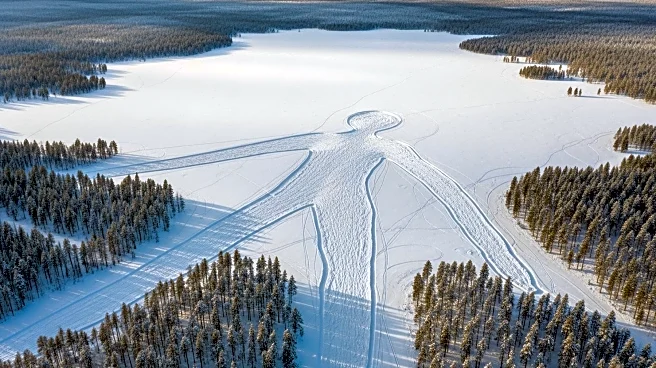
NASA's Landsat 8 satellite captured an image of a unique natural formation in the Russian Arctic, resembling a towering snowman. The formation consists of a series of frozen lagoons stretching over 14 miles near the village of Billings on the Chukchi
Peninsula. Researchers attribute the snowman-like shape to natural geological processes involving ice, wind, and water. The phenomenon, known as 'thermokarst' activity, occurs when buried ice wedges melt, causing the soil to collapse and form shallow depressions that fill with meltwater. The alignment and shape of the lagoons are influenced by wind and wave movements.
Why It's Important?
This discovery provides insight into the natural geological processes occurring in the Arctic region, which is crucial for understanding the impacts of climate change. The formation's unique shape highlights the dynamic nature of the Arctic landscape and the role of environmental factors in shaping it. Such findings can inform future research on Arctic ecosystems and contribute to global climate models. The image also underscores the importance of satellite technology in monitoring remote and inaccessible regions.