



What's Happening?
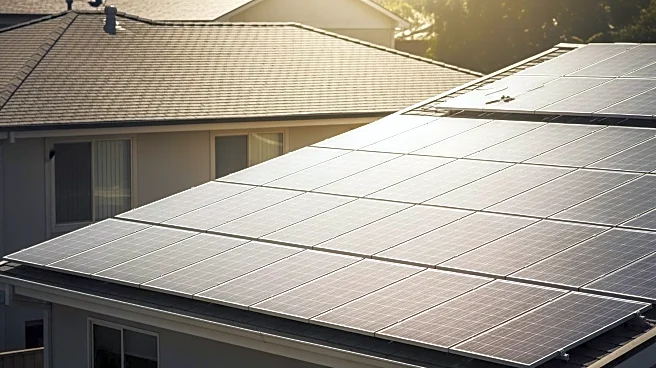
A new study led by economist Professor Charles Sims from the University of Tennessee warns that widespread adoption of rooftop solar panels could inadvertently raise electricity bills for those who remain reliant on the traditional grid. The study, conducted
within the Tennessee Valley Authority (TVA) region, found that as more households install solar panels and disconnect from the grid, utilities are left with fixed costs spread over fewer customers. This shift could lead to a 10% increase in electricity rates for those who do not adopt solar. The study highlights the potential for a 'utility death spiral,' where rising rates encourage more solar adoption, further exacerbating the issue.
Why It's Important?
The findings of this study have significant implications for energy policy and economic equity. As solar technology becomes more affordable, the potential for increased energy costs for non-solar households could deepen economic disparities, particularly affecting low-income families. Policymakers face the challenge of balancing the environmental benefits of solar energy with the need to maintain equitable access to affordable electricity. The study suggests that without careful planning and policy adjustments, such as implementing grid access fees for solar users, the transition to renewable energy could have unintended negative consequences for vulnerable populations.
What's Next?
Policymakers are urged to consider measures to prevent utilities from entering a financial spiral and to protect households unable to afford solar installations. Implementing grid access fees for solar customers could help utilities recover fixed costs and maintain financial stability. The study's findings may prompt further research and policy discussions on how to equitably manage the transition to renewable energy, ensuring that all consumers benefit from advancements in solar technology without disproportionate financial burdens.