
What's Happening?
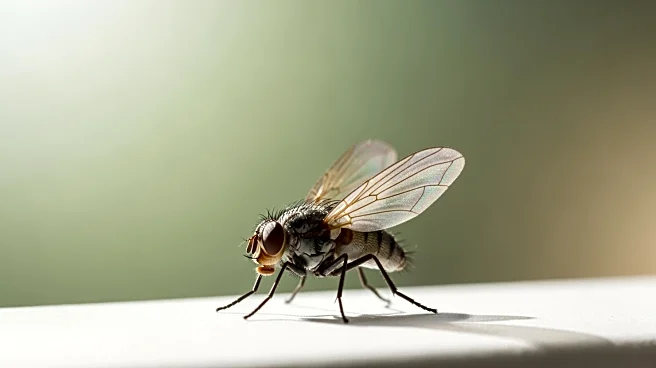
The U.S. Department of Agriculture (USDA) is intensifying efforts to control the spread of the New World screwworm by releasing glow-in-the-dark, sterile flies near the U.S.-Mexico border and in southern
Texas. This action aims to prevent the flesh-eating pest from advancing into the United States. The USDA has halted imports of Mexican livestock to curb the pest, exacerbating a cattle shortage and driving up beef prices. The agency produces 100 million sterile flies weekly in Panama, now deploying them closer to the border to create a buffer zone.
Why It's Important?
The screwworm poses a significant threat to livestock, potentially impacting the U.S. cattle industry and consumer beef prices. The USDA's proactive measures are crucial in safeguarding the U.S. agricultural sector from economic losses. The halt in Mexican livestock imports highlights the interconnectedness of U.S. and Mexican agricultural markets and the potential for cross-border pest issues to affect domestic supply chains. The situation underscores the importance of international cooperation in pest control and biosecurity.
What's Next?
The USDA plans to expand sterile fly production, with a new facility in Texas expected to bolster efforts, though it remains a year from completion. The agency's strategy includes creating a buffer zone to prevent the pest's northward spread. Continued monitoring and collaboration with Mexican authorities will be essential in managing the screwworm threat. The USDA's actions may influence future policies on cross-border agricultural trade and pest management.