



What's Happening?
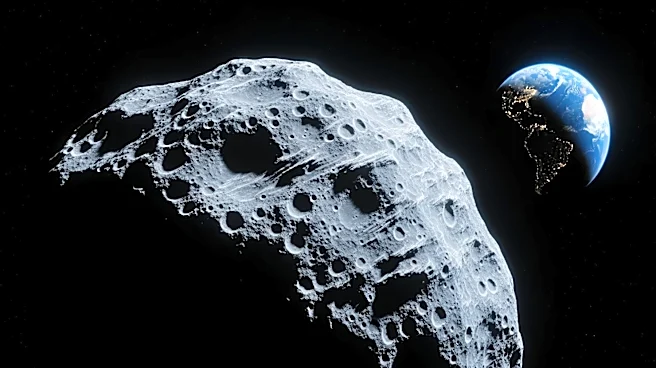
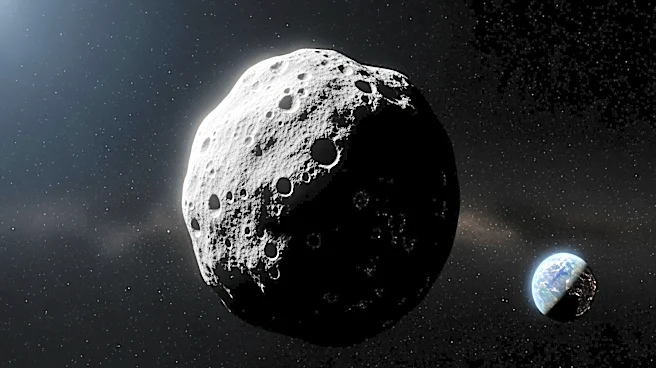
A newly discovered asteroid, named 2026 JH2, is set to pass by Earth at a remarkably close distance on Monday, May 18. The asteroid, which is approximately the size of a blue whale, was first identified by astronomers at the Mount Lemmon Observatory in
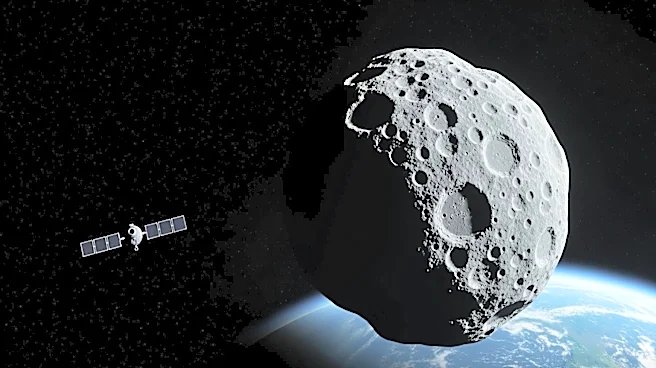
Arizona on May 10. Traveling at a speed of about 20,000 mph, 2026 JH2 will come within 56,000 miles of Earth, a distance closer than some of the satellites orbiting the planet. Despite its proximity, scientists assure that there is no risk of collision with Earth. The asteroid's orbit, which takes it as far as Jupiter, is highly elliptical and it completes a circuit around the sun every 3.7 years. The event will be visible to those with telescopes or binoculars, and a live stream will be available through the Virtual Telescope Project.
Why It's Important?
The close approach of asteroid 2026 JH2 provides a rare opportunity for scientific observation and public engagement with space phenomena. Such events allow astronomers to study the characteristics and trajectories of near-Earth objects, which is crucial for planetary defense strategies. Understanding the behavior of asteroids like 2026 JH2 can help in predicting future encounters and assessing potential threats. Additionally, the public interest generated by such events can enhance awareness and support for space research and exploration initiatives. The ability to observe the asteroid through live streams also democratizes access to space observation, fostering a broader interest in astronomy.
What's Next?
Following the flyby of 2026 JH2, scientists will continue to monitor other near-Earth objects, including the 'God of Chaos' asteroid, Apophis, which is expected to pass even closer to Earth in 2029. While Apophis poses no immediate threat, its trajectory will be closely observed to ensure any potential future risks are mitigated. The data collected from these observations will contribute to ongoing research and the development of strategies to protect Earth from potential asteroid impacts. Public and scientific interest in these events is likely to drive further investment in space observation technologies and international collaboration in space safety initiatives.