






What's Happening?
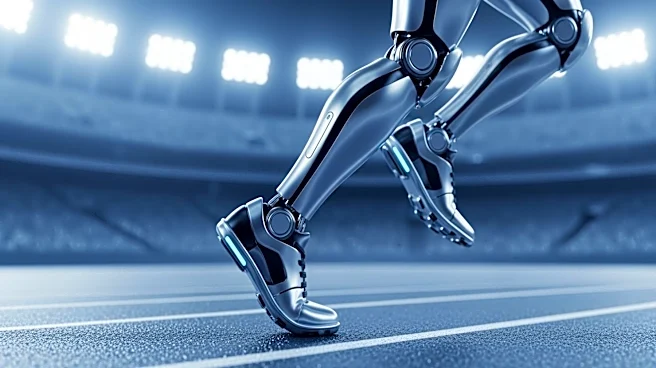
A humanoid robot developed by Honor, a Chinese smartphone maker, has outpaced the human half-marathon world record during a race in Beijing. The robot completed the 21-kilometer race in 50 minutes and 26 seconds, surpassing the human record set by Uganda's
Jacob Kiplimo, who finished the same distance in about 57 minutes. This event, held in the Beijing Economic-Technological Development Area, marked a significant improvement from the previous year's race, where the winning robot took over two hours to complete the course. The race featured both autonomous and remotely controlled robots, with about 40% navigating the course independently. The event highlighted China's rapid advancements in robotics, with the winning robot utilizing a powerful liquid-cooling system and design elements inspired by human athletes.
Why It's Important?
This achievement underscores China's growing prowess in robotics and artificial intelligence, areas of strategic importance in the global technological landscape. The ability of a robot to surpass human athletic performance in a half-marathon race signals potential future applications of such technology in various industrial and commercial sectors. The event also reflects China's commitment to advancing its technological capabilities, as outlined in its latest five-year plan, which emphasizes the development of cutting-edge technologies. This development could have implications for the U.S.-China technological rivalry, as both nations vie for leadership in AI and robotics. The success of the humanoid robot may inspire further investment and innovation in the field, potentially leading to new applications and industries.
What's Next?
The success of the humanoid robot in this race may lead to increased interest and investment in robotics research and development. As China continues to prioritize technological innovation, we can expect further advancements in the capabilities and applications of humanoid robots. These developments could influence global markets and industries, particularly in sectors where automation and robotics can enhance efficiency and productivity. Additionally, the event may prompt other countries to accelerate their own robotics initiatives to remain competitive. The potential for humanoid robots to perform tasks traditionally done by humans could lead to shifts in labor markets and economic structures.
Beyond the Headlines
The achievement of the humanoid robot raises questions about the future role of robots in society and the ethical considerations surrounding their integration into daily life. As robots become more capable of performing tasks that require human-like abilities, there may be debates about the implications for employment, privacy, and security. The event also highlights the cultural fascination with technology and its potential to redefine human capabilities. As robots continue to evolve, society will need to address the challenges and opportunities they present, ensuring that technological advancements benefit humanity as a whole.