
What's Happening?
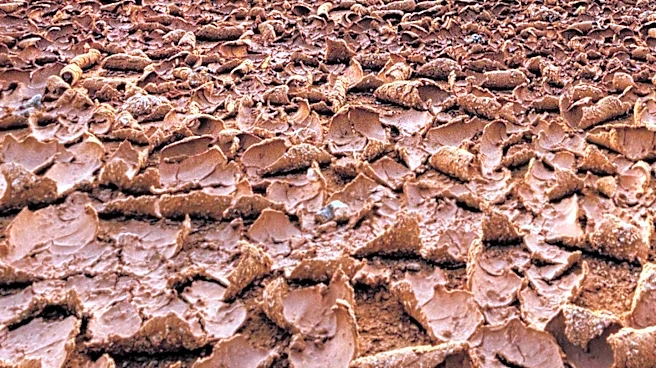
China is experiencing a severe heatwave that is threatening its agricultural regions, particularly affecting corn, rice, and cotton fields in the north and east. The high-pressure weather systems are causing
temperatures to soar, with some areas like Shenyang experiencing highs of 35 to 38 degrees Celsius. This heatwave is accelerating soil moisture loss, which is critical for crops in their growth stages. The situation is compounded by high humidity, increasing the risk of crop diseases. The heat is also affecting Xinjiang, a major cotton-producing region, where temperatures could reach up to 50 degrees Celsius, potentially reducing cotton production by 5% in August.
Why It's Important?
The heatwave poses a significant threat to China's agricultural output, which could have broader implications for global food supply and prices. As China is a major producer of corn, rice, and cotton, any reduction in yield could lead to increased prices and supply shortages. This situation highlights the vulnerability of agricultural sectors to climate change and extreme weather events. The potential crop failures could also impact China's economy, affecting farmers' livelihoods and increasing the need for imports to meet domestic demand.
What's Next?
If the heatwave persists, it could lead to long-term damage to China's agricultural sector, necessitating government intervention and support for affected farmers. There may also be increased pressure on international markets as China seeks to import more food to compensate for domestic shortfalls. Additionally, this situation could prompt further discussions on climate change adaptation strategies in agriculture to mitigate the impact of extreme weather events.
Beyond the Headlines
The heatwave in China underscores the growing challenges posed by climate change, particularly in regions heavily reliant on agriculture. It raises questions about the sustainability of current agricultural practices and the need for innovation in crop management and water conservation. The situation also highlights the interconnectedness of global food systems, where disruptions in one region can have ripple effects worldwide.