






What's Happening?
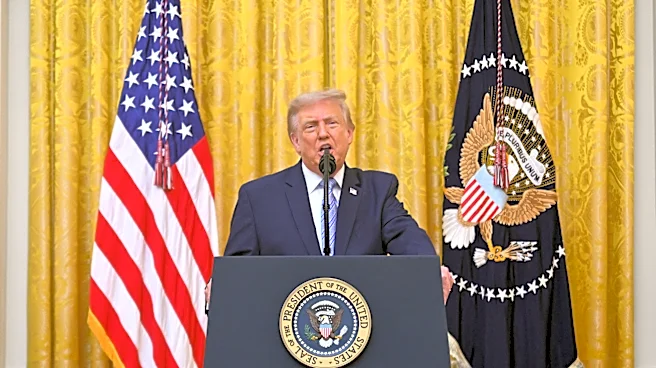
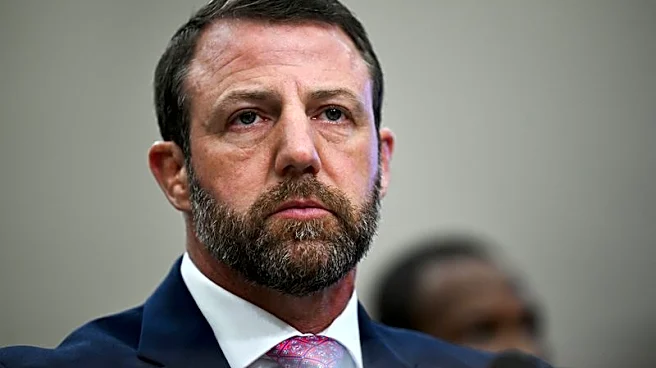
Senator Ed Markey has called for the impeachment of President Donald Trump following a prime-time address in which Trump claimed that the same forces that allegedly stole the 2020 election are now threatening the 2026 midterms. Markey, a Massachusetts
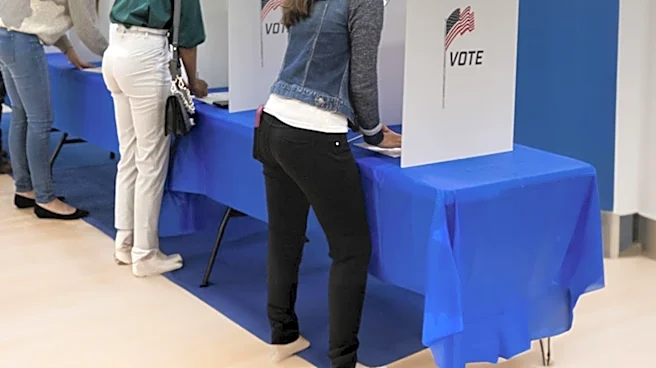
Democrat, accused Trump of undermining free and fair elections and suggested that civic action, including protests and withholding labor, should be considered in response. During his address, Trump alleged that the Chinese government had acquired 220 million American voter files over five years, beginning in the 2020 election cycle, and claimed that China attempted to manufacture illegal ballots for Joe Biden. Critics from both parties have noted that Trump provided no evidence for his claims of widespread election fraud, and pointed out that voter information is largely public or can be purchased from state governments.
Why It's Important?
The call for impeachment by Senator Markey highlights ongoing tensions and divisions within U.S. politics regarding election integrity and foreign interference. Trump's allegations, despite lacking evidence, continue to fuel debates about the legitimacy of past and future elections. This situation underscores the challenges faced by the U.S. political system in maintaining public trust in electoral processes. The potential impeachment proceedings, although unlikely to succeed in a Republican-controlled House, could further polarize the political landscape and impact upcoming elections. The discourse around election integrity and foreign interference remains a critical issue for both political parties, influencing policy decisions and public perception.
What's Next?
Any new impeachment effort against President Trump faces significant hurdles in the Republican-controlled House, where two Democratic resolutions are already pending before the Judiciary Committee. Representative John Larson introduced a resolution in April, and Representative Al Green filed another in June 2025. Both resolutions have minimal support and are unlikely to advance. The ongoing political discourse may lead to increased scrutiny of election processes and potential legislative actions to address election security. The reactions from political leaders and the public will shape the future of election integrity discussions and could influence the strategies of both parties in the lead-up to the 2026 midterms.