








What's Happening?
The Kennedy family has endured a long history of untimely deaths, medical catastrophes, and high-profile scandals, leading to the persistent notion of a 'Kennedy curse.' This narrative, publicly acknowledged by Ted Kennedy in 1969, encompasses events
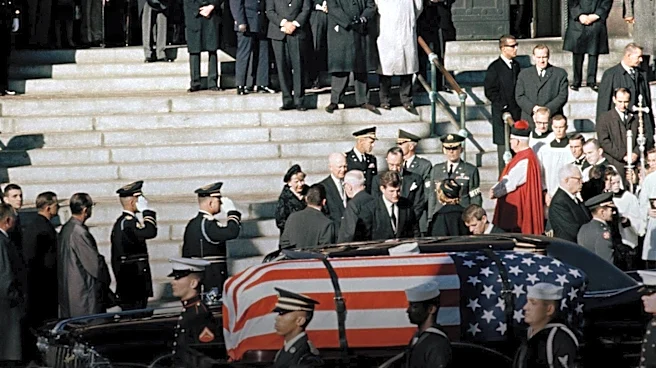
from the incapacitation of Rosemary Kennedy after a lobotomy in 1941, to the deaths of Joseph P. Kennedy Jr. in World War II, Kathleen 'Kick' Kennedy in a plane crash, and the assassinations of President John F. Kennedy and Robert F. Kennedy. More recent tragedies include the drug overdose of David A. Kennedy, the ski accident death of Michael Kennedy, the plane crash involving John F. Kennedy Jr., and the suicides of Mary Richardson Kennedy and Saoirse Kennedy Hill. The family also experienced the drowning deaths of Maeve Kennedy McKean and her son Gideon, and the death of Tatiana Schlossberg from leukemia. These events span decades, affecting multiple generations of the prominent American political family.
Why It's Important?
The ongoing series of misfortunes within the Kennedy family holds significant cultural and historical importance in the U.S. It has shaped public perception of the family, contributing to a sense of tragic destiny that often overshadows their political and public service achievements. The 'Kennedy curse' narrative has become a part of American folklore, influencing how the public views power, privilege, and vulnerability. For political observers, it serves as a stark reminder of the personal costs associated with public life, while for the general public, it highlights the unpredictable nature of life, even for those in prominent positions. The continuous stream of tragedies has also fueled media fascination, contributing to the enduring legacy and mystique surrounding the Kennedy name.
Beyond the Headlines
The 'Kennedy curse' extends beyond mere misfortune, touching upon deeper themes of fate, public scrutiny, and the pressures associated with a dynastic political family. The constant media attention on the family's personal lives, particularly during times of tragedy or scandal, raises questions about the boundaries of privacy for public figures. The narrative also implicitly explores the psychological impact of such a legacy on surviving family members, who must navigate their lives under the shadow of past events. Furthermore, the concept of a 'curse' can be seen as a societal attempt to rationalize inexplicable tragedies, offering a narrative framework for events that defy simple explanation, thereby embedding the Kennedy family's story deeply within the American collective consciousness.