



What's Happening?
Eric H. Holder, Jr., the 82nd Attorney General of the United States and Chairman of the National Democratic Redistricting Committee (NDRC), has announced his endorsements for the 2026 Arizona Gubernatorial and Legislative elections. These endorsements are
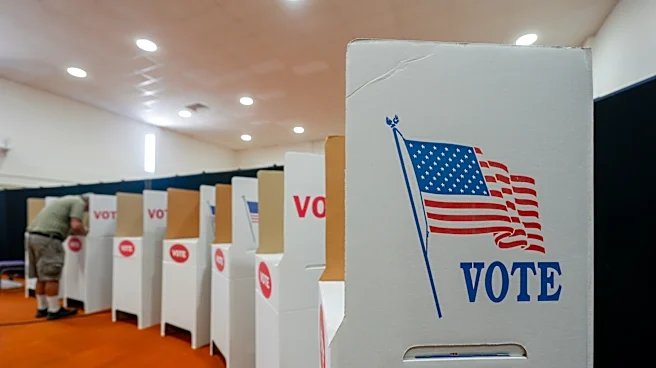
part of the NDRC’s Democracy Defenders program, which aims to support candidates running for state-level offices deemed critical for safeguarding and strengthening democracy. Holder emphasized that Arizonans have an opportunity to elect a state government that is responsive to its people and to reject what he described as partisan chaos from Washington. He criticized extremists in the Arizona legislature for allegedly disregarding the will of the people and pursuing an anti-democracy agenda that undermines voting rights. In contrast, Holder praised Governor Katie Hobbs for her record of protecting voting rights, including preserving vote by mail and convenient ballot drop-off locations, and for fighting against efforts to make voter registration and voting more difficult. He urged Arizonans to re-elect Governor Hobbs and other Democratic candidates who will prioritize their constituents over Washington politicians.
Why It's Important?
These endorsements by Eric Holder and the NDRC highlight a significant focus on state-level elections as crucial battlegrounds for democratic principles in the U.S. The NDRC's 'Democracy Defenders' program underscores the belief that state offices play a vital role in shaping election laws, voting access, and overall democratic integrity. By supporting specific candidates in Arizona, the NDRC aims to counter what it perceives as efforts to undermine voting rights and promote an 'anti-democracy agenda.' This initiative reflects a broader national strategy by Democratic-aligned groups to influence state legislative and gubernatorial races, recognizing their direct impact on issues like redistricting, election administration, and voter access. The outcome of these elections could significantly affect the political landscape in Arizona, potentially influencing future federal elections and the balance of power within the state, impacting policies on various issues beyond just voting rights.
What's Next?
The endorsements by Eric Holder are expected to galvanize support for the named Democratic candidates in Arizona, leading to increased campaign activities and voter engagement efforts ahead of the November 2026 elections. The NDRC's continued involvement through its Democracy Defenders program will likely include further resource allocation and strategic support for these candidates. Opposing political groups and candidates are anticipated to respond to these endorsements, potentially intensifying the political discourse around election integrity, voting rights, and state governance in Arizona. The focus will remain on voter turnout and the effectiveness of campaign messaging in swaying public opinion. The results of these elections will serve as a key indicator of the prevailing political sentiment in Arizona and could influence future strategies for both Democratic and Republican parties in upcoming election cycles, particularly concerning state-level control and its implications for national politics.
Beyond the Headlines
The NDRC's emphasis on 'Democracy Defenders' and the criticism of an 'anti-democracy agenda' reflect a deeper national concern about the erosion of democratic norms and institutions. This narrative extends beyond individual elections, touching upon fundamental questions of governance, representation, and the role of state legislatures in upholding or challenging electoral processes. The focus on issues like vote by mail, ballot drop-off locations, and voter registration laws highlights ongoing debates about access to the ballot box and the integrity of elections. These endorsements are not merely about supporting candidates but are part of a larger ideological struggle over the future direction of American democracy, particularly at the state level where many critical decisions regarding elections are made. The long-term implications could include shifts in voter participation, changes in electoral outcomes, and a redefinition of what constitutes fair and secure elections in the U.S.