





What's Happening?
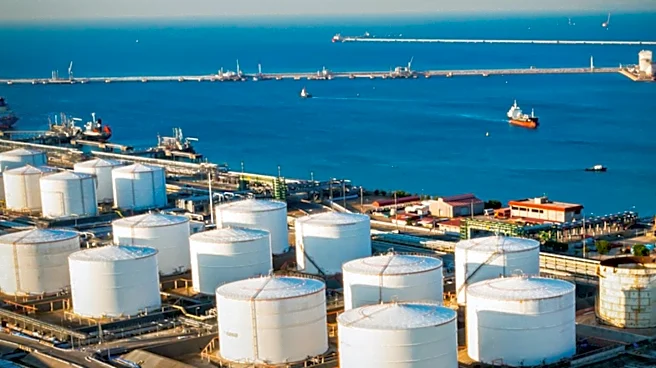
Azerbaijan has experienced a significant increase in its gas exports, with gas accounting for 26% of the country's total exports in the first eight months of 2026, reaching $5.48 billion. This marks a substantial shift from the early 2000s when oil constituted
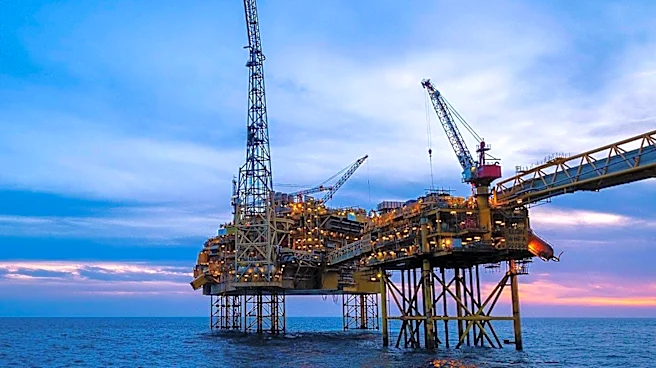
around 90% of exports. The diversification of Azerbaijan's export portfolio is further evidenced by non-oil exports reaching an all-time high of $6.27 billion during the same period, nearly ten times the total national exports in 1994. This economic transformation is attributed to strategic energy projects like the 'Contract of the Century' signed in 1994, the commissioning of the Baku-Tbilisi-Ceyhan (BTC) pipeline, and the Southern Gas Corridor (SGC), alongside the promotion of non-oil industries. The country's GDP per capita has grown over 120-fold, from $60 in 1992 to $7,400, and its strategic foreign exchange reserves now exceed $90 billion.
Why It's Important?
The surge in Azerbaijan's gas exports and its broader economic diversification are important for global energy security and regional stability. As global markets face concerns and shortages in energy resources, Azerbaijan's increased gas supply contributes to meeting international demand. This diversification also strengthens Azerbaijan's economy, making it more resilient to external financial shocks and reducing its reliance on a single commodity. The country's transformation from a near-zero export base in 1994 to a significant energy exporter and a regional economic driver highlights the impact of strategic energy and industrial policies. The development of substantial reserve generating capacities, as noted by President Ilham Aliyev, positions Azerbaijan to further scale up its energy exports, including electricity, in the coming years, addressing global energy needs.
What's Next?
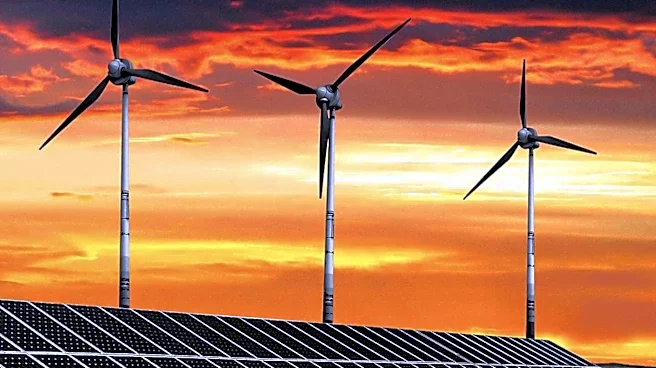
Azerbaijan plans to further deepen its economic diversification with the planned start of green energy exports by 2030. This initiative is expected to strengthen the country's economic buffer against future financial shocks. President Ilham Aliyev has indicated that electricity exports will become large-scale in the coming years, capitalizing on the substantial reserve generating capacities and global demand for energy resources. The ongoing strategic energy projects and the continued promotion of non-oil industries suggest a sustained effort to expand Azerbaijan's economic footprint beyond traditional hydrocarbon exports. The country's focus on creating a complete chain for the mining industry, from raw materials to final products, also points to future growth in other sectors.
Beyond the Headlines
The economic transformation of Azerbaijan, driven by strategic energy deals and diversification efforts, offers a case study in post-Soviet economic development. The 'Contract of the Century' was not merely an oil and gas agreement but a foundational element for the reconstruction of the entire national economy. This long-term vision has enabled Azerbaijan to achieve full economic independence and establish itself as a critical pillar of global energy security. The country's ability to significantly increase exports and diversify its economy, even outpacing the relative growth rate of larger regional economies like Turkey, underscores the impact of sustained strategic planning and investment. The shift towards green energy exports by 2030 also highlights a forward-looking approach to energy policy, aligning with global sustainability trends while ensuring continued economic growth and stability.