






What's Happening?
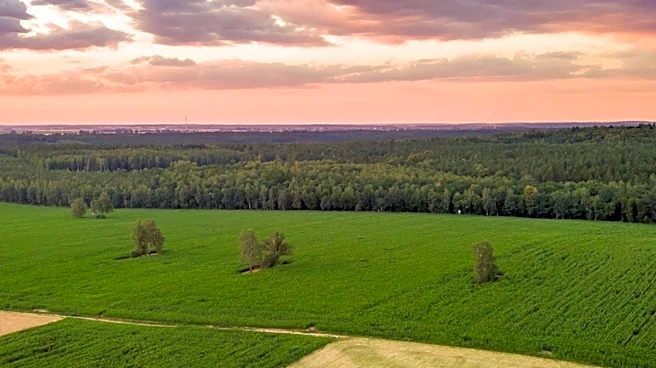
The St. Johns County Commission has approved the potential future development of over 1,000 acres of agricultural land, which could lead to the construction of nearly 15,000 homes. This decision, made during a special meeting, involved ruling that three
parcels of land qualified as 'agricultural enclaves' under a new state law, SB 686. The approved projects, Heritage East and Heritage West, encompass 615 and 550 acres respectively, located near the intersection of Interstate 95 and State Road 207. Commissioners expressed dissatisfaction with the new law, which they view as a state preemption, but felt compelled to approve the applications based on legal requirements. A decision on another large-scale project of over 4,000 acres near Nocatee has been delayed until next month.
Why It's Important?
This development is significant for St. Johns County and Florida as a whole, as it represents a substantial shift in land use from agriculture to residential housing. The new state law, SB 686, has drawn criticism for potentially reducing public oversight on large-scale developments, raising concerns about unchecked growth and its impact on infrastructure, natural resources, and community character. The approval of these projects could exacerbate issues like traffic congestion, strain on public services such as schools, and environmental degradation. For developers, the law streamlines the process for converting agricultural land, potentially accelerating housing construction. However, for residents and environmental advocates, it signifies a loss of agricultural land and a potential decline in quality of life due to rapid urbanization.
What's Next?
The approved Heritage East and Heritage West projects will now move forward with submitting detailed development plans to the county staff. These plans will undergo existing checks and balances for school concurrency and environmental impact, but will not require further approval from the County Commission or public hearings. The decision on the 4,000-plus acre development near Nocatee, proposed by the Davis family, is scheduled for September 1. The County Commission is also considering potential legal challenges to the new state law, though their legal counsel has advised against directly suing the state. The upcoming change in the County Commission's makeup, with a new growth-skeptic commissioner joining in December, could influence future development decisions and the county's stance on growth management.
Beyond the Headlines
The controversy surrounding SB 686 and the subsequent development approvals highlights a deeper tension between state-level legislative mandates and local control over land use. The commissioners' reluctance to approve the projects, despite feeling legally bound, underscores a growing frustration among local governments with state preemption laws that limit their ability to manage growth according to local needs and preferences. This situation could lead to increased calls for legislative reform or legal challenges to state laws perceived as undermining local autonomy. Furthermore, the rapid conversion of agricultural land raises ethical questions about food security, environmental stewardship, and the long-term sustainability of unchecked urban sprawl, potentially triggering broader public discourse on responsible development practices in Florida.