






What's Happening?
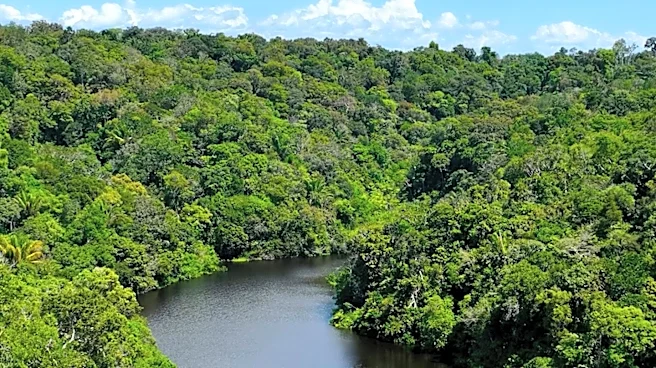
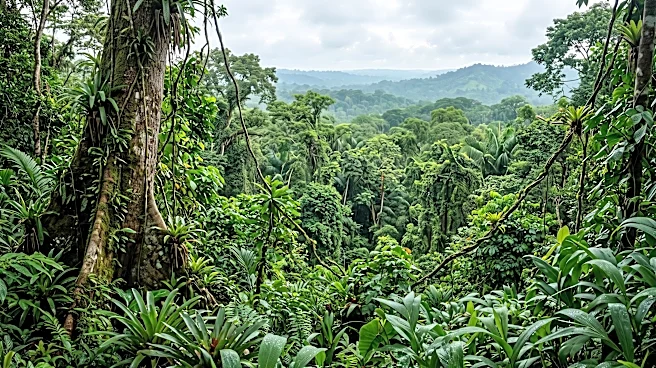
The Amazon rainforest, a vast tropical ecosystem spanning several South American countries, is home to an extraordinary diversity of plants, including many with potent chemical defenses. Research indicates that some plants contain natural chemicals that can be
dangerous to humans and animals. For example, the Manchineel Tree, often called the 'Tree of Death,' has highly poisonous fruits and sap that can cause severe irritation, swelling, and even blindness. While the Manchineel is primarily found in coastal areas outside the main Amazon basin, its relative, the Sandbox Tree, is present within parts of the Amazon. The Sandbox Tree features a thorny trunk, toxic sap, and fruits that explode to disperse seeds. Other poisonous plants in the Amazon include vines associated with Curare, which can cause muscle paralysis, and Dieffenbachia, known for its irritating calcium oxalate crystals.
Why It's Important?
The presence of highly poisonous plants in the Amazon underscores the complex and often dangerous nature of its biodiversity. For researchers, these plants offer valuable insights into chemical ecology and the evolution of defense mechanisms, with some compounds holding potential for medicinal applications. However, for humans, particularly those exploring or living near these areas, understanding and identifying such flora is crucial for safety. The Manchineel Tree, despite its limited presence in the Amazon, serves as a stark reminder of the extreme toxicity that can exist in nature. The study of these plants contributes to a broader understanding of the Amazon's ecological balance, where every species, including those with harmful properties, plays a role in the ecosystem's survival and evolution.
What's Next?
Ongoing botanical research and toxicology studies continue to uncover the chemical compounds and biological adaptations of Amazonian plants. This research is vital for understanding potential medicinal uses, as well as for developing safety protocols for those interacting with the rainforest environment. Educational initiatives are important to inform tourists, researchers, and local communities about plant identification and necessary precautions, such as avoiding unknown fruits or sap. The focus will remain on scientific investigation to differentiate between traditional uses and clinically proven safe treatments, ensuring that the rich biodiversity of the Amazon is explored responsibly and safely. The long-term goal is to balance human safety with the preservation of these unique and often dangerous species within their natural habitats.
Beyond the Headlines
The existence of highly poisonous plants in the Amazon highlights a fundamental aspect of natural selection and ecological competition. Plants develop toxins as a defense mechanism against herbivores and pathogens, showcasing millions of years of evolutionary adaptation. This natural 'chemical warfare' is a critical component of the rainforest's intricate food web and nutrient cycles. Beyond their immediate danger, these plants represent a vast, largely untapped reservoir of biochemical compounds that could hold keys to new medicines or scientific discoveries. The challenge lies in safely and ethically exploring this potential, respecting both the inherent dangers and the ecological importance of these species. The narrative also serves as a cautionary tale, emphasizing that beauty or familiarity in nature does not equate to safety, and deep knowledge is required for safe interaction.