





What's Happening?
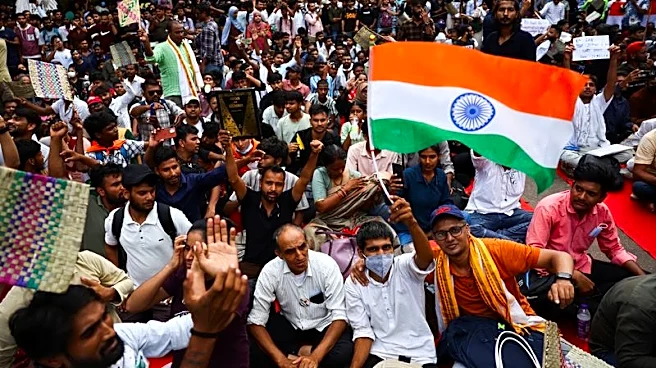
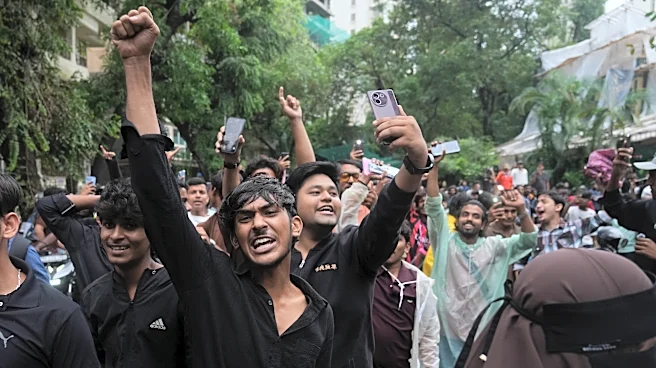
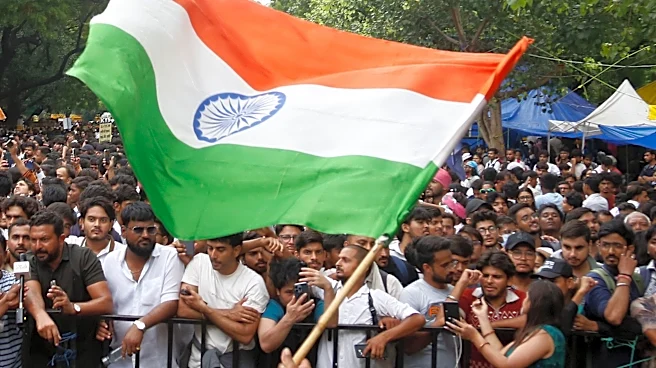
India's 'Cockroach' protests have gained momentum, initially sparked by alleged leaks in competitive entrance exams for medical schools and government jobs. The movement has expanded beyond exam-related grievances, drawing diverse participants and reflecting
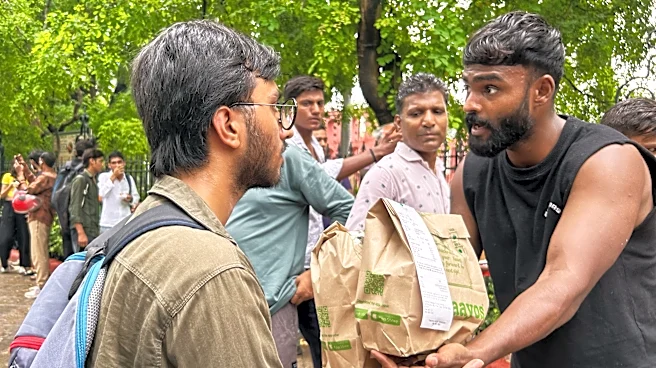
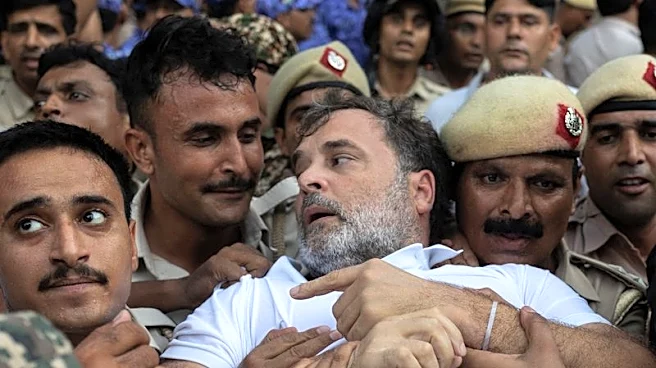
broader public dissatisfaction. A notable incident involved Rhiya Ahir, who confronted police officers detaining protesters in Mumbai. The protests symbolize a growing demand for accountability and transparency in government processes, with participants expressing frustration over perceived injustices and systemic failures.
Why It's Important?
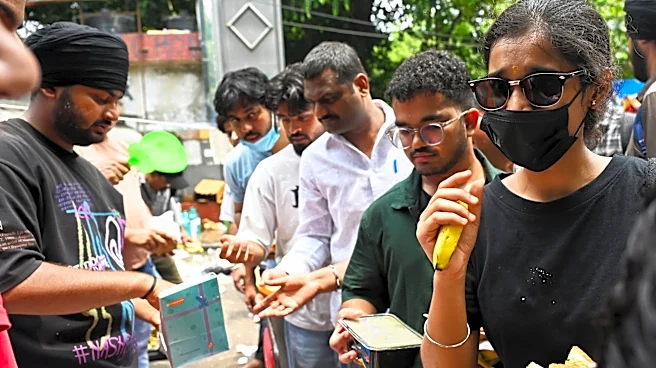
The 'Cockroach' protests highlight significant public discontent with government institutions and processes in India. The movement's expansion beyond exam leaks indicates widespread frustration with systemic issues, including corruption and lack of transparency. The protests could lead to increased pressure on the government to address these concerns and implement reforms. The involvement of professionals and families suggests a broad base of support, which may influence political discourse and policy decisions.
What's Next?
The protests are likely to continue, with participants demanding accountability and transparency from government institutions. The movement may inspire similar actions in other regions, potentially leading to broader calls for reform. The government's response, including potential policy changes and engagement with protest leaders, will be crucial in addressing public grievances and restoring trust in government processes.