






What's Happening?
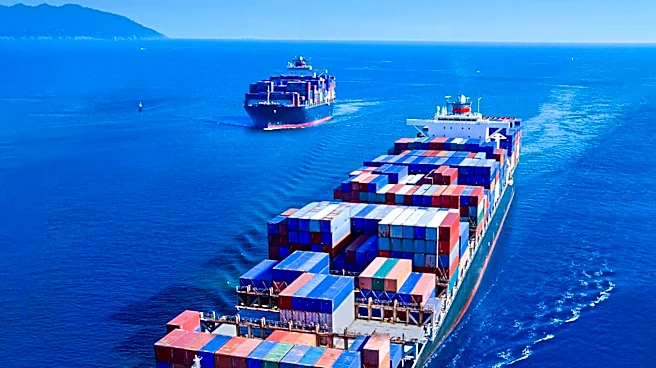
Russia's state nuclear corporation, Rosatom, has granted permits for seven Chinese vessels to transit the Northern Sea Route (NSR) to Europe. This marks the beginning of a regular container service by Sea Legend Shipping, aiming to establish the NSR as a viable
alternative to traditional routes like the Suez Canal. The initiative comes as geopolitical tensions and logistical uncertainties, particularly in the Persian Gulf, prompt a search for new shipping pathways. The NSR offers a shorter route between Asia and Europe, though it faces challenges such as high costs and seasonal ice.
Why It's Important?
The development of the NSR as a regular shipping route could significantly impact global trade dynamics, offering a faster alternative to the Suez Canal. This could reduce shipping times and costs for goods between Asia and Europe, benefiting industries reliant on efficient logistics. However, the route's viability is contingent on overcoming environmental challenges and ensuring safe navigation. The move also reflects shifting geopolitical strategies, as countries seek to diversify trade routes amid regional conflicts and uncertainties.
What's Next?
As the NSR gains traction, further investments in infrastructure and icebreaker support are expected to enhance its accessibility. Shipping companies may increasingly consider the route for its potential cost and time savings. However, environmental concerns and the need for international cooperation on Arctic navigation standards will be critical. The success of this initiative could influence future shipping policies and encourage other nations to explore Arctic routes.