
What's Happening?
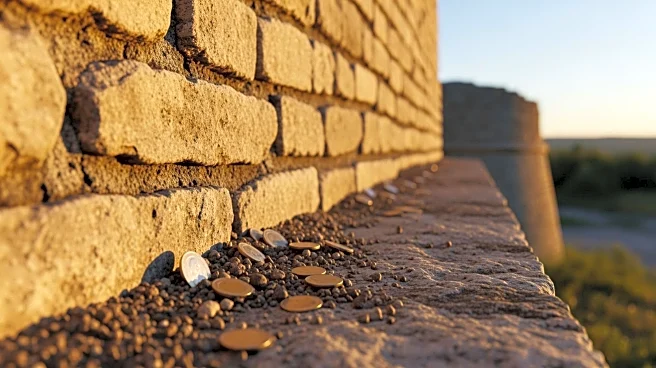
A series of silver coins, illegally sold on the black market, has led to the discovery of a remarkably well-preserved prehistoric fortress in the Papuk Mountains of eastern Croatia. The coins, dating back
to the La Tène period of the late Iron Age, caught the attention of archaeologists who traced them back to the Gradina site. Despite the initial damage caused by looting, the discovery has revealed a complex series of defensive walls made from dry-stone construction, some reaching a thickness of over 1.5 meters and heights of up to 8 meters. This find is considered one of the best-preserved prehistoric settlements in the region, showcasing a level of sophistication and organization rarely seen in prehistoric Europe.
Why It's Important?
The discovery of the Gradina fortress provides significant insights into prehistoric European societies, particularly in terms of their architectural capabilities and social organization. The well-preserved nature of the site offers a rare opportunity for archaeologists to study the construction techniques and societal structures of the time. This find not only enhances our understanding of prehistoric Europe but also highlights the potential for archaeological discoveries in regions previously overlooked. The incident underscores the impact of illegal artifact trade on historical research, as the looting initially stripped away crucial context about the site.
What's Next?
Archaeologists are expected to continue excavations at the Gradina site to uncover more about the prehistoric society that built the fortress. Further studies will likely focus on the ceramic fragments found nearby, which suggest the site was a long-term settlement. The findings could lead to a reevaluation of the historical significance of the region and potentially attract more archaeological interest and funding. Additionally, the discovery may prompt increased efforts to combat the illegal trade of artifacts, as it demonstrates the potential loss of historical context and information.
Beyond the Headlines
The discovery of the Gradina fortress raises ethical questions about the preservation of archaeological sites and the impact of illegal artifact trade. It highlights the need for stronger international cooperation to protect cultural heritage and prevent the loss of historical information. The incident also serves as a reminder of the importance of responsible archaeological practices and the potential consequences of looting on our understanding of history.