





What's Happening?
Attorney General Raúl Torrez, leading a coalition of state attorneys general, has formally opposed the U.S. Forest Service's proposed revisions to the Travel Management Rule. The proposed changes would shift the current 'closed unless designated open'
system for motorized vehicle access on nearly 200 million acres of National Forest System lands to a 'open unless closed' presumption. This revision would eliminate requirements for minimizing environmental harm before allowing motorized travel, reduce public involvement, and pressure local managers to open more roads and trails without adequate environmental review. The coalition argues that this proposal, coupled with another recent Forest Service proposal to rescind the 2001 Roadless Area Conservation Rule, would significantly expand motorized access and roadbuilding in forests, leading to potential environmental damage and management instability. The attorneys general also criticized the Forest Service for providing only a 30-day public comment period for a proposal with such widespread national implications, urging for extended opportunities for public input.
Why It's Important?
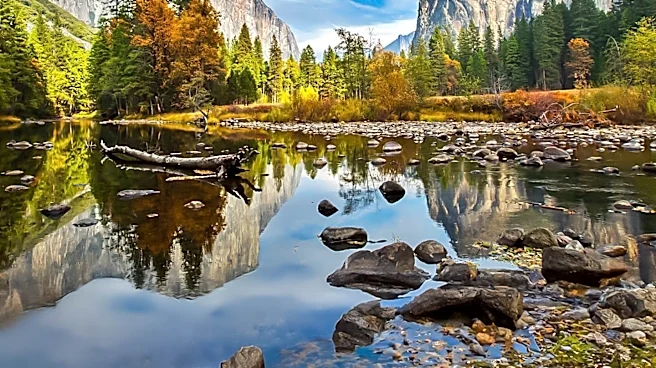
The proposed changes to the Travel Management Rule carry significant implications for the environment, wildlife, water resources, and the outdoor recreation economy across the U.S. By potentially increasing unmanaged motorized access, the revisions could lead to habitat fragmentation, degraded water quality, accelerated erosion, and the spread of invasive species. Wildlife, including numerous threatened and endangered species such as salmon, lynx, elk, and Mexican spotted owls, could face irreversible harm due to increased noise, disturbance, and habitat disruption. Furthermore, the proposal threatens vital municipal water sources protected by National Forests, as increased road traffic and construction could elevate sedimentation and pollution. The outdoor recreation economy, which contributes nearly $700 billion to the nation's GDP, could also suffer, as increased motorized access in previously protected areas might degrade experiences for non-motorized users, impacting rural communities dependent on such tourism. The lack of comprehensive environmental review and the short public comment period also raise concerns about transparency and adherence to legal requirements under acts like NEPA and the Endangered Species Act.
What's Next?
The coalition of state attorneys general is urging the U.S. Forest Service to extend the public comment period to allow for more meaningful public involvement. They also emphasize that any changes to the Travel Management Rule must comply with existing legal requirements under the National Environmental Policy Act (NEPA), National Forest Management Act (NFMA), Multiple-Use Sustained-Yield Act (MUSYA), Endangered Species Act (ESA), the Wilderness Act, and the National Historic Preservation Act (NHPA). The Forest Service will need to address these legal and environmental concerns raised by the states. The outcome of this proposal will likely determine the future management approach for motorized vehicle access across vast tracts of U.S. National Forests, potentially leading to further legal challenges or revised proposals depending on the agency's response to the public and state attorneys general's feedback.
Beyond the Headlines
The debate over the Travel Management Rule highlights a deeper philosophical conflict regarding the use and preservation of public lands. The shift from 'closed unless designated open' to 'open unless closed' reflects a fundamental change in how access to natural resources is prioritized. This move could be seen as favoring motorized recreation and resource extraction over conservation and non-motorized recreational activities. The criticism regarding the short public comment period also points to broader concerns about public participation in environmental policy-making and the potential for agencies to push through significant changes without adequate stakeholder input. The interconnectedness of this proposal with the potential rescission of the 2001 Roadless Area Conservation Rule suggests a coordinated effort to expand access and development in previously protected areas, which could have long-term consequences for biodiversity, ecosystem health, and the character of America's wilderness areas. This situation underscores the ongoing tension between economic development, recreational access, and environmental protection in the management of federal lands.