








What's Happening?
Republican leaders in the House of Representatives have formally requested the White House to terminate the 150-day waiver of the Jones Act, which is the longest and most extensive since 1950. The waiver, initially intended to address high fuel prices,
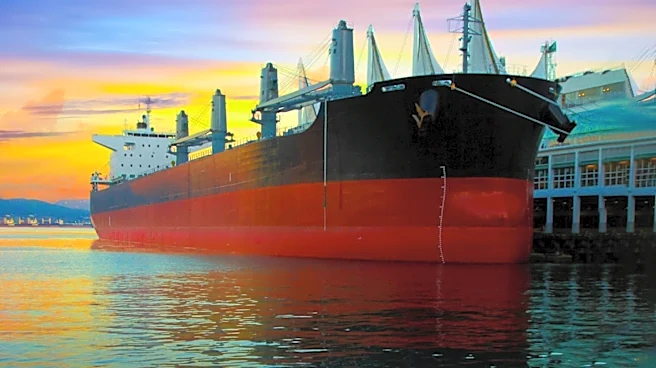
allows foreign-flagged ships to transport goods between U.S. ports, bypassing the Jones Act's requirement for U.S.-built, -owned, and -crewed vessels. House Speaker Mike Johnson, along with other key Republican figures, argues that the waiver undermines the U.S. maritime industry by benefiting foreign operators who do not adhere to U.S. tax and immigration laws. The waiver's impact on domestic shipping and shipbuilding has been contentious, with industry advocates claiming it has not significantly affected gas prices but has harmed the domestic maritime sector.
Why It's Important?
The Jones Act waiver has significant implications for the U.S. maritime industry and national security. By allowing foreign-flagged ships to operate between U.S. ports, the waiver potentially weakens the domestic shipping industry, which relies on the Jones Act for protection against foreign competition. This could lead to long-term economic consequences, including job losses in shipbuilding and shipping sectors. Additionally, the waiver raises national security concerns, as it allows foreign entities greater access to U.S. waterways. The debate over the waiver highlights the tension between economic efficiency and national security, with proponents arguing for lower fuel costs and opponents emphasizing the need to protect domestic industries.
What's Next?
The future of the Jones Act waiver remains uncertain. With global oil prices dropping and domestic fuel prices stabilizing, the original rationale for the waiver has diminished. The White House has yet to decide whether to extend the waiver beyond its current expiration date of August 16, 2026. If the waiver is allowed to expire, it could lead to a resurgence in domestic maritime activity, but it may also result in higher fuel prices. The decision will likely involve weighing the economic benefits of lower fuel costs against the strategic importance of maintaining a robust domestic maritime industry.