





What's Happening?
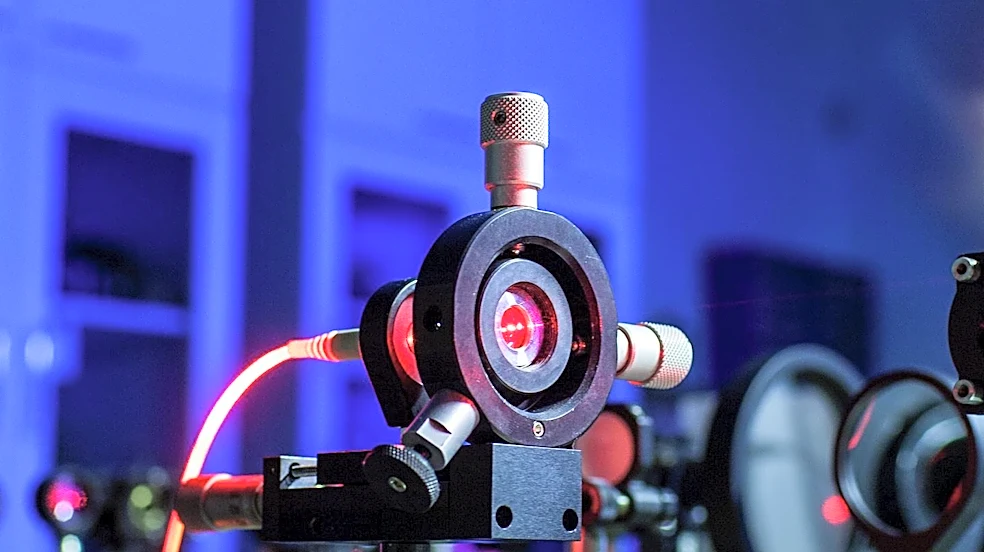
Researchers at the University of Tennessee (UT), including Alexis Devitre and Ewan McCombs, have brought online a new laser-based system for assessing the integrity of materials within nuclear reactors. This technology, known as transient grating spectroscopy
(TGS), is an automated laser evaluation technique designed to check reactor materials in situ, meaning while the reactor is operational. The TGS system fires brief laser pulses onto a material's surface, creating a ripple, and then measures the decay of this ripple with a separate probe laser. This process allows scientists to evaluate the material's thermoelastic performance and identify stressors causing damage. The development is a collaborative effort involving multiple disciplines at UT and Oak Ridge National Laboratory (ORNL), including the Tennessee Ion Beam Materials Laboratory (TIBML).
Why It's Important?
This advancement is crucial for enhancing the safety and operational efficiency of nuclear power plants. Current methods often require reactors to be powered down or parts to be removed for inspection, which is time-consuming, costly, and can expose personnel to radiation. The in-situ capability of TGS eliminates these drawbacks, allowing for continuous monitoring of material integrity without interrupting reactor operations. This could lead to more proactive maintenance, prevent potential failures, and extend the lifespan of existing nuclear facilities. By providing real-time data on material degradation, TGS can significantly improve safety standards and reduce the economic burden associated with reactor downtime and complex inspection procedures, contributing to the reliability of nuclear energy as a power source.
What's Next?
Upon completion, the TGS system will enhance UT's material characterization capabilities and integrate with ATHENA, the university's federally funded research hub focused on automating material characterization. The team's next goal is to standardize and improve TGS into an everyday diagnostic test that can evaluate nuclear facility integrity globally. Researchers are also working to understand how TGS readings vary based on local structural differences within materials, which is critical for accurate assessment of reactor components. The project aims to make TGS a widely adopted technique, allowing for continuous and non-invasive monitoring of reactor materials, thereby improving safety and operational longevity.
Beyond the Headlines
The development of TGS represents a significant step towards a more resilient and sustainable nuclear energy infrastructure. Beyond its immediate application in reactor safety, this technology highlights the broader trend of integrating advanced diagnostic tools and automation into critical industrial processes. The interdisciplinary nature of the research, involving nuclear engineering, materials science, and physics, underscores the complexity and collaborative effort required to innovate in high-stakes fields. Furthermore, the ability to monitor materials without human exposure to radiation has profound ethical implications for worker safety in the nuclear industry. This technology could also pave the way for more advanced predictive maintenance models, moving from reactive repairs to proactive interventions, which could have applications beyond nuclear power, in other industries dealing with extreme material environments.