









What's Happening?
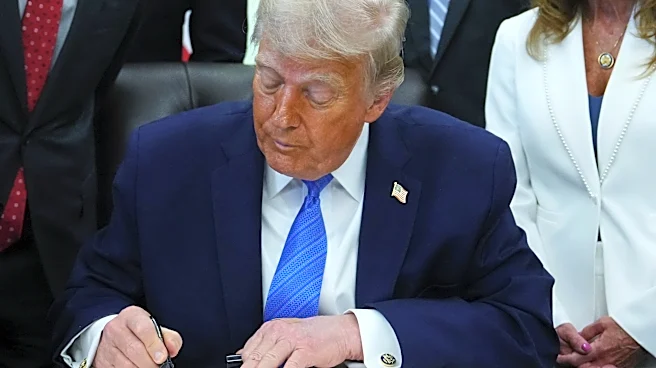
President Trump has announced that a potential peace deal with Iran could be signed as soon as this weekend, aiming to reopen the Strait of Hormuz and extend a ceasefire. This development follows a three-month conflict that has significantly impacted
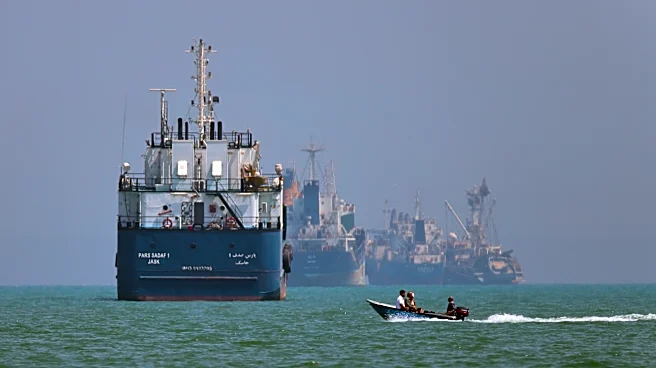
global energy prices due to Iran's closure of the strait. Trump stated that the agreement would involve lifting blockades and paving the way for nuclear negotiations. Despite Trump's optimism, Iranian officials have indicated that no final agreement has been reached, with key issues still under review. The announcement has led to a positive response in financial markets, with Asian equities surging and oil prices dropping. However, tensions remain high, as evidenced by recent military actions in the region.
Why It's Important?
The potential peace deal between the U.S. and Iran is significant as it could stabilize a critical global shipping route and reduce geopolitical tensions that have affected energy markets. The reopening of the Strait of Hormuz would likely lead to increased oil flow, impacting global oil prices and benefiting economies reliant on oil imports. Additionally, the deal could pave the way for further diplomatic negotiations regarding Iran's nuclear capabilities, addressing international security concerns. However, the ongoing military tensions and political implications, including President Trump's approval ratings and the upcoming U.S. midterm elections, add complexity to the situation.
What's Next?
If the deal is signed, it could lead to a temporary easing of tensions and a focus on nuclear negotiations. However, the reaction from other Middle Eastern countries, such as Israel and Saudi Arabia, will be crucial in determining the deal's success. The U.S. and Iran will need to address remaining red-line issues to finalize the agreement. Additionally, the political fallout in the U.S., particularly concerning Trump's approval ratings and the Republican Party's stance, could influence future diplomatic efforts.
Beyond the Headlines
The potential agreement raises questions about the long-term implications for U.S.-Iran relations and regional stability. The deal could shift power dynamics in the Middle East, affecting alliances and conflicts involving Iran and its neighbors. Furthermore, the focus on nuclear negotiations highlights the ongoing global concern over nuclear proliferation and the need for effective international agreements to prevent the development of nuclear weapons.