

What's Happening?
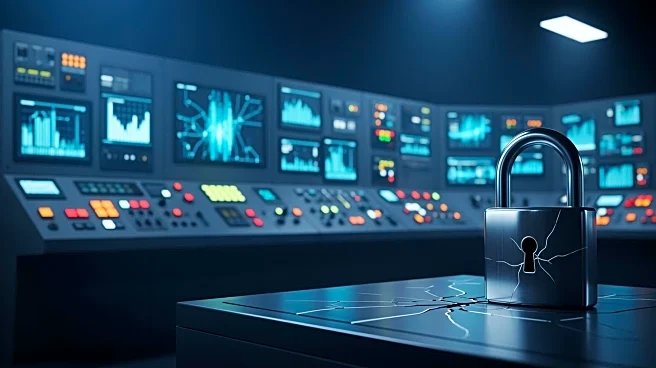
State-affiliated hackers have shifted their focus to targeting U.S. industrial control systems (ICS), posing a significant threat to critical infrastructure. According to cybersecurity firm Dragos, groups such as Voltzite, linked to China's Volt Typhoon
campaign, have been manipulating engineering workstations within U.S. energy and pipeline networks. This activity aims to identify operational conditions that could trigger process shutdowns, elevating the threat to a more advanced stage of the ICS Cyber Kill Chain. Additionally, the Kamacite group has been scanning U.S. industrial control devices, mapping specific control loops, while its partner group Electrum has conducted cyberattacks on Polish energy infrastructure.
Why It's Important?
The targeting of U.S. industrial control systems by state-affiliated hackers underscores the vulnerability of critical infrastructure to cyber threats. With fewer than 10% of OT networks having adequate monitoring, the potential for undetected disruptions is high. Such attacks could lead to significant operational and economic impacts, affecting energy supply, manufacturing processes, and public safety. The involvement of groups linked to major state actors like China and Russia highlights the geopolitical dimensions of these cyber threats, necessitating a coordinated response from government and industry stakeholders to enhance cybersecurity defenses.
What's Next?
To mitigate the risks posed by these cyber threats, it is crucial for operators of critical infrastructure to implement robust monitoring and detection systems. This includes enhancing network security, conducting regular vulnerability assessments, and ensuring that incident response plans are up-to-date. Collaboration between government agencies, industry partners, and cybersecurity experts will be essential to address the evolving threat landscape. As state-affiliated hackers continue to refine their tactics, ongoing vigilance and proactive measures will be necessary to protect critical infrastructure from potential disruptions.