







What's Happening?
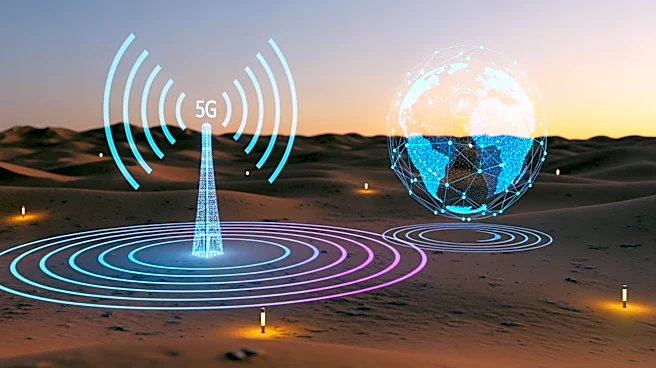
China is advancing its Digital Silk Road initiative, a component of the Belt and Road Initiative, to enhance its technological influence in the Middle East. This strategy involves significant investments in artificial intelligence, 5G telecommunications,
smart cities, and digital finance. Major Chinese technology companies like Huawei, Alibaba, and Tencent are central to this expansion, providing infrastructure and services across the region. Countries such as Saudi Arabia, the UAE, and Iraq are engaging with China to modernize their digital infrastructure, aiming to diversify their economies away from oil dependency. Huawei, in particular, is playing a crucial role in developing 5G networks and smart city projects, despite geopolitical controversies surrounding its operations.
Why It's Important?
The Digital Silk Road represents a strategic shift in global economic and political power, with China positioning itself as a leading technological power. This initiative not only strengthens China's economic ties with the Middle East but also challenges Western technological dominance. For Middle Eastern countries, partnering with China offers access to affordable and rapidly deployable technology solutions, which are crucial for their national development plans. However, this growing influence raises concerns about cybersecurity, data privacy, and geopolitical dependencies, as Western nations worry about China's expanding reach.
What's Next?
As the Digital Silk Road continues to develop, Middle Eastern countries will likely deepen their technological partnerships with China. This could lead to increased digital trade and economic integration within the region. However, these countries will need to balance their relationships with China, the U.S., and Europe to maintain strategic flexibility. The ongoing geopolitical competition between China and Western powers will likely intensify, with the Middle East serving as a key battleground for technological influence.
Beyond the Headlines
The expansion of the Digital Silk Road could lead to long-term shifts in global power dynamics, with digital infrastructure becoming as crucial as traditional infrastructure. This transformation may redefine international relations, with data control and technological innovation becoming central to geopolitical influence. The initiative also raises ethical questions about digital sovereignty and the potential for increased surveillance and control by foreign powers.