





What's Happening?
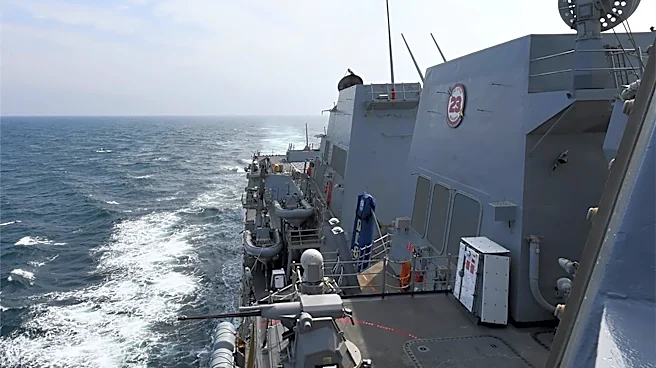
Taiwan is set to conduct joint exercises involving the Interior Ministry and other departments to ensure the island's access to critical supplies in the event of a Chinese naval blockade. This initiative comes in response to the potential risk of a blockade,
as demonstrated by Iran's recent closure of a global energy chokepoint. The drills will focus on escorting ships carrying natural gas and oil, highlighting Taiwan's proactive measures to safeguard its energy security. A senior Taiwanese official emphasized the importance of these exercises, warning that a large-scale denial of access to the region could have significant implications for the entire area.
Why It's Important?
The drills underscore Taiwan's strategic efforts to maintain energy security amid rising tensions with China. As Taiwan relies heavily on imports for its energy needs, any disruption could have severe economic consequences. The exercises are a clear signal of Taiwan's commitment to protecting its sovereignty and ensuring uninterrupted access to essential resources. This development is significant for regional stability, as it highlights the potential for conflict in the Asia-Pacific region. The situation also reflects broader geopolitical dynamics, with Taiwan seeking to bolster its defenses against possible Chinese aggression.
What's Next?
Taiwan's upcoming drills may prompt reactions from China, which could view the exercises as a provocative move. The international community will likely monitor the situation closely, given the potential for escalation. Taiwan may also seek support from allies to strengthen its position and deter any aggressive actions from China. The drills could lead to increased diplomatic efforts to address regional security concerns and prevent further tensions.
Beyond the Headlines
The drills highlight the complex interplay between energy security and geopolitical tensions in the Asia-Pacific region. Taiwan's proactive measures reflect its determination to safeguard its interests amid growing pressure from China. The situation raises questions about the future of cross-strait relations and the potential for conflict over resource access. It also underscores the importance of international cooperation in maintaining regional stability and preventing disruptions to global energy supplies.