








What's Happening?
The head of the Comprehensive Nuclear Test Ban Treaty Organization, Robert Floyd, has issued a warning regarding the potential resumption of nuclear testing by the United States and Russia. Floyd emphasized that if either country proceeds with nuclear tests,
it could trigger a chain reaction, prompting other nations to follow suit. This warning comes amid concerns raised last year when both countries, possessing the largest nuclear arsenals globally, threatened to resume testing. The treaty, known as the CTBT, was adopted in 1996 but has not yet entered into force due to the requirement of ratification by 44 specific countries, nine of which have not yet ratified it. Floyd highlighted the importance of finding a way for China, Russia, and the U.S. to ratify the treaty together, which would be a significant step forward.
Why It's Important?
The potential resumption of nuclear testing by major powers like the United States and Russia poses significant risks to global security and stability. Such actions could undermine decades of efforts to curb nuclear proliferation and testing, leading to increased tensions and a possible arms race. The CTBT's failure to enter into force highlights the challenges in achieving global consensus on nuclear disarmament. The treaty's international monitoring system is crucial for detecting nuclear tests, ensuring transparency, and maintaining international peace. The situation underscores the need for diplomatic efforts to prevent a return to widespread nuclear testing, which could have catastrophic consequences for international relations and global security.
What's Next?
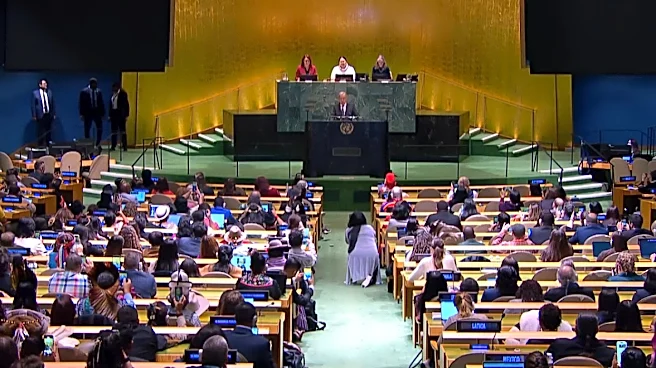
The ongoing review of a separate treaty aimed at preventing the spread of nuclear weapons at the United Nations provides an opportunity for diplomatic engagement. Efforts to encourage ratification of the CTBT by key countries, including the U.S., China, and Russia, will be crucial. The international community may need to explore new strategies to incentivize these nations to commit to the treaty. Additionally, continued dialogue and negotiations among nuclear powers are essential to prevent the escalation of nuclear testing and to promote disarmament. The role of international organizations and monitoring systems will be vital in maintaining oversight and accountability.