
What's Happening?
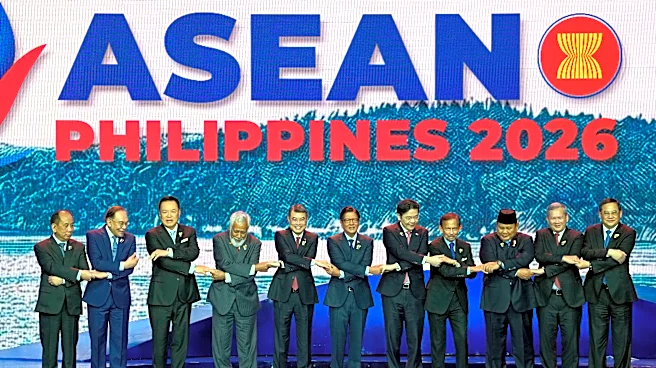
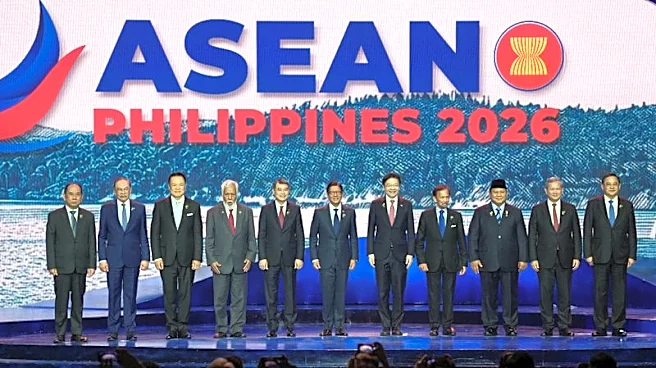
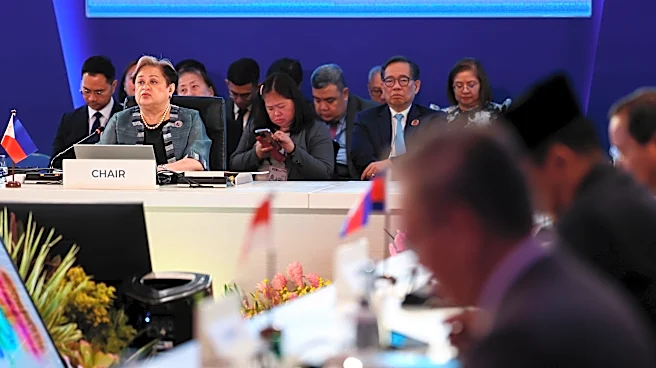
Southeast Asian leaders have adopted a contingency plan to mitigate the effects of the ongoing Iran war on their economies and populations. The plan, discussed at the ASEAN summit in Cebu, Philippines,
includes measures such as establishing a regional fuel reserve, planning a regional power grid, and diversifying crude oil sources. The Philippines, significantly affected by fuel price spikes due to the conflict, hosted the summit. President Ferdinand Marcos Jr. emphasized the complexity of implementing these measures, particularly the establishment of a regional fuel stockpile and power grid. The leaders also discussed the potential need for large-scale evacuations from the Middle East, where many Southeast Asians reside. The summit highlighted the region's vulnerability to external shocks and the long-term recovery challenges even if the conflict ends soon.
Why It's Important?
The ASEAN leaders' actions underscore the significant economic and social challenges posed by the Iran war, particularly in terms of energy security and regional stability. The contingency plan aims to reduce dependency on volatile oil markets and enhance energy cooperation among member states. This initiative reflects a broader trend of regional collaboration in response to global conflicts, highlighting the interconnectedness of geopolitical events and their far-reaching impacts. The plan's success could serve as a model for other regions facing similar challenges, emphasizing the importance of collective action in addressing global crises.
What's Next?
The implementation of the ASEAN contingency plan will require coordinated efforts among member states, with immediate steps to be taken while more complex measures, like the regional fuel stockpile, are developed. The leaders will need to navigate logistical and political challenges to ensure the plan's success. Additionally, the ongoing conflict in the Middle East will continue to be a focal point for ASEAN, with potential implications for regional security and economic stability. The bloc's ability to effectively respond to these challenges will be crucial in maintaining its relevance and influence in global affairs.