





What's Happening?
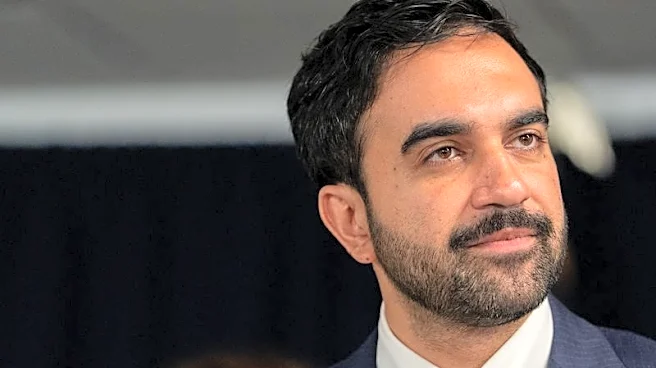
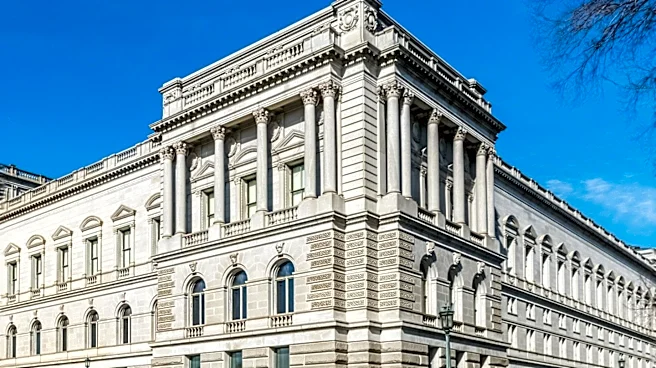
The Library of Congress has announced the recipients of its 2026-2027 National Stereoscopic Association Research Fellowships: Jennifer Marine and Nisarg Patel. Each fellow will receive a two-week fellowship to conduct original research within the Library’s
Prints and Photographs Division. This division houses one of the world's most extensive collections of stereoscopic and photographic materials. The fellowship, established in 2022 through a donation from the National Stereoscopic Association, aims to promote advanced scholarship in stereoscopy and the history of photography. The Library's holdings include over 15 million photographs, rare publications, manuscripts, and historic newspapers, with more than 66,000 digitized stereographs available online. Stereographs, which create a three-dimensional effect, were popular from the Civil War era through the early 20th century and continue to influence modern immersive media technologies like virtual reality. The Prints and Photographs Division serves as a leading research center for this format, with stereographs dating from the 1850s to the 1930s.
Why It's Important?
This fellowship program is important for advancing academic research into the historical and technological significance of stereoscopy. By supporting scholars like Jennifer Marine and Nisarg Patel, the Library of Congress ensures that its vast collections are utilized to uncover new insights into visual culture, technology, and their societal impacts. Marine's research on the use of stereoscopic technology in mapping physical landscapes and the human body, particularly its application in surgical, military, and navigational contexts from 1896 through World War I, highlights the practical and scientific importance of this historical medium beyond mere entertainment. Patel's work on how visual media shaped perceptions of Indian history, from British imperial rule to the end of colonization, demonstrates the critical role of stereographs and other visual forms in constructing historical narratives and cultural understanding. The continued study of stereoscopy also provides valuable context for understanding the evolution of immersive media technologies, influencing current developments in virtual reality and other visual experiences.
What's Next?
Jennifer Marine will conduct research on 'Depth and Direction: Mapping, Surveying, and Charting with the Stereoscope,' utilizing the Library's collections of aerial, expedition, and survey stereophotographs, as well as materials related to radiographs. Her work will explore how stereographs were used to map and navigate new land and bodily territories. Nisarg Patel will focus on his dissertation, 'En-framed: Visual Culture and the Changing Perception of History in India (1860–1960),' examining how visual media influenced perceptions of Indian history. He will use the Library’s collections of 19th-century stereographs, early 20th-century Indian cinema, and postcolonial literature, including an analysis of James Ricalton’s 'India through Stereoscope.' The National Stereoscopic Association Research Fellowship is awarded annually, indicating ongoing support for scholarship in this field. The research conducted by these fellows will likely contribute to new academic publications, exhibitions, and a deeper public understanding of the historical and contemporary relevance of stereoscopy.
Beyond the Headlines
The research supported by these fellowships extends beyond historical analysis, touching upon the foundational aspects of visual perception and the development of immersive technologies. The study of stereoscopy's early applications in mapping and medicine, as explored by Jennifer Marine, reveals how seemingly niche technologies can have profound practical implications, influencing fields from cartography to surgery. Nisarg Patel's examination of stereographs in shaping historical narratives in India underscores the power of visual media in constructing and challenging cultural identities and historical memory. This highlights the ethical considerations in how visual information is presented and interpreted, particularly in colonial and post-colonial contexts. The enduring influence of stereographs on modern immersive media, such as virtual reality, suggests a continuous lineage of human desire for three-dimensional visual experiences, prompting deeper questions about the evolution of human interaction with technology and the future of visual storytelling.