
What's Happening?
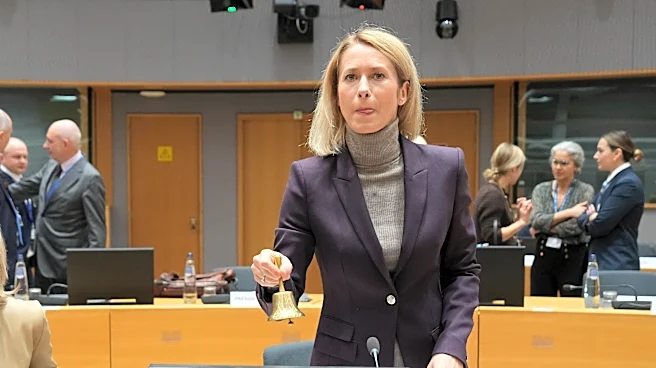
Roberta Metsola, President of the European Parliament, attended a mass in Brussels commemorating the Day of Remembrance for the victims of the Domovinski rat (Homeland War) and the victims of Vukovar and Škabrnja. The mass, led by Varaždin Bishop Monsignor
Bože Radoš, gathered Croatian officials, diplomats, and Croatians working in European institutions. Monsignor Radoš emphasized the right of every person to a grave and expressed solidarity with those still suffering from the loss and disappearance of loved ones. Croatian representative Sunčana Glavak stressed the importance of confronting the past and achieving reconciliation among nations. She also drew a parallel between the events in Croatia in 1991 and the ongoing conflict in Ukraine, highlighting the message that such atrocities should never recur on European soil. The event served as a solemn reminder of historical conflicts and a call for peace and remembrance.
Why It's Important?
This event is important as it underscores the European Union's commitment to historical remembrance and reconciliation, particularly concerning conflicts within its broader geographical and historical context. The presence of President Metsola signifies the institutional recognition of the suffering endured during the Homeland War and the symbolic importance of Vukovar and Škabrnja. For the U.S., this reflects a shared value with European allies in acknowledging historical injustices and promoting peace, which aligns with broader transatlantic diplomatic efforts. The comparison drawn between the 1991 events in Croatia and the current conflict in Ukraine by a Croatian representative highlights the ongoing relevance of historical lessons in contemporary geopolitical challenges. This reinforces the narrative of collective security and the prevention of conflict, which are key tenets of U.S. foreign policy in Europe. The event also serves to strengthen cultural and historical ties within the European diaspora, including those with connections to the U.S.
What's Next?
The commemoration is an annual event, suggesting continued remembrance and educational initiatives regarding the Homeland War and its victims. The message of reconciliation and prevention of future conflicts, particularly in light of the ongoing war in Ukraine, is likely to be reiterated in various European forums. This could lead to further discussions within the European Parliament on how to apply lessons from past conflicts to current geopolitical situations. For the U.S., continued engagement with European partners on issues of historical memory and conflict resolution will remain relevant, potentially influencing diplomatic strategies and support for peace-building efforts in Eastern Europe. The emphasis on confronting the past may also encourage further dialogue on historical narratives and their impact on international relations.
Beyond the Headlines
Beyond the immediate commemoration, this event touches upon deeper ethical and cultural dimensions. The call for confronting the past and achieving reconciliation speaks to the complex process of healing and nation-building after conflict. It highlights the enduring human need for remembrance and the right to mourn, particularly for those whose loved ones remain missing. The parallel drawn with Ukraine suggests a broader European consciousness regarding the fragility of peace and the imperative to prevent historical repetitions. This also reflects on the role of religious institutions in providing solace and a platform for remembrance in times of national trauma. The presence of high-ranking European officials at such a religiously significant event also subtly underscores the interplay between faith, politics, and collective memory in shaping European identity and policy.