





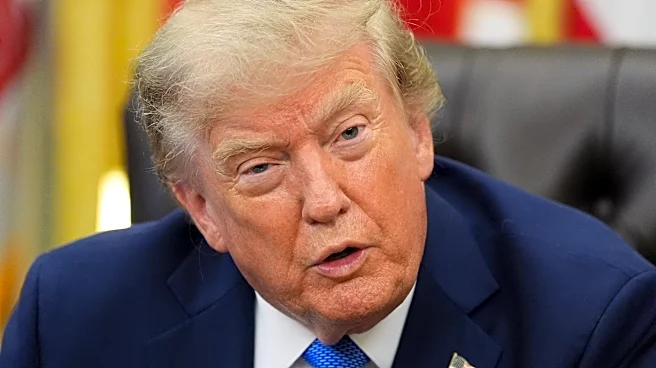
What's Happening?
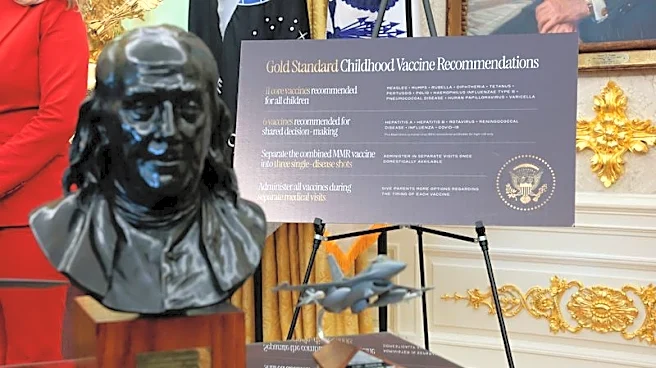
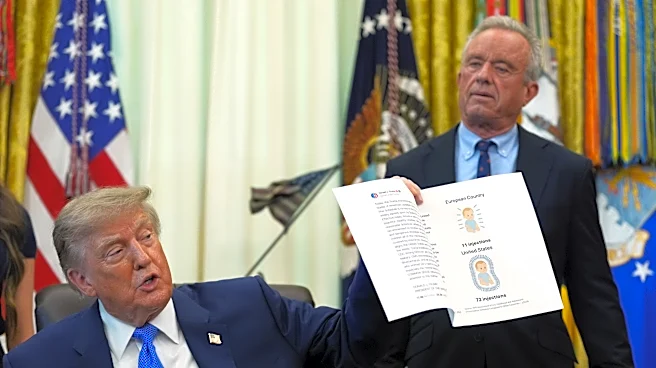
President Trump has issued a new executive order that significantly alters the federal government's approach to childhood vaccinations. The order, announced from the Oval Office, reduces the number of recommended vaccines for children from 18 to 11 and
extends the timeline over which they are administered. This move marks a departure from the traditional, science-led process of vaccine recommendations, instead relying on comparisons with international systems and advice from the president's advisers. The order also controversially suggests splitting the MMR vaccine into three separate shots, a change not supported by current scientific evidence. The administration claims the new policy complies with previous court orders and asserts the president's right to define the 'gold standard' for vaccinations.
Why It's Important?
This executive order could have significant implications for public health in the United States, particularly for children. By altering the established vaccine schedule, the administration risks undermining public confidence in vaccines, which are a critical tool in preventing infectious diseases. The order has been met with criticism from health experts and some lawmakers, who argue that it lacks scientific backing and could lead to decreased vaccination rates. This could potentially result in outbreaks of preventable diseases, posing a threat to public health. The order also places the incoming CDC director, Erica Schwartz, in a challenging position as she has committed to following scientific evidence in her role.
What's Next?
The administration's new vaccine policy is likely to face legal challenges and scrutiny from the medical community. Hospitals and doctors may choose to ignore the new recommendations if they are not supported by scientific evidence. The federal health department's Task Force on Safer Childhood Vaccines has been directed to issue a report on the evidence supporting the president's assertions, which could influence future policy decisions. Additionally, the order may prompt further debate and legislative action as lawmakers and public health officials respond to the changes.
Beyond the Headlines
The executive order reflects a broader shift in the administration's approach to health policy, emphasizing skepticism towards established medical practices. This aligns with the views of the Make America Healthy Again movement, which has been critical of vaccines. The order could also impact the vaccine market, as changes in federal recommendations may influence vaccine production and distribution. The administration's stance may embolden vaccine skeptics and contribute to a growing divide between scientific consensus and public policy.