





What's Happening?
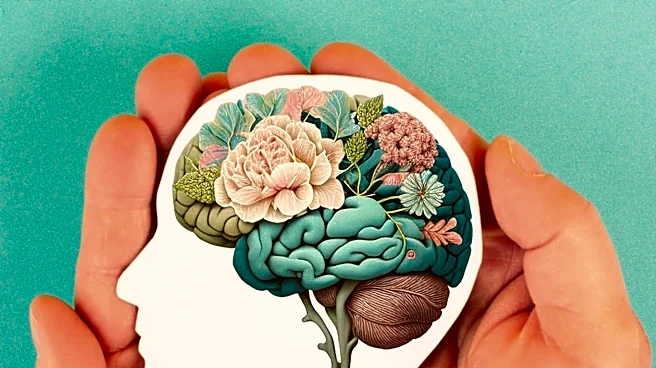
A recent brain imaging experiment, published in iScience, indicates that individuals with even subtle political differences process information using distinct patterns of brain activity. The study, led by neuroscientists Niloufar Zebarjadi and Annika
Kluge at Aalto University in Finland, along with Jonathan Levy at Bar-Ilan University in Israel, focused on attitudes toward immigration. Researchers recorded fMRI data from 40 participants while they listened to pro- and anti-immigration statements. They observed neural polarization, a phenomenon where the brain activity of individuals with similar political beliefs synchronizes while consuming political content, and diverges from those with opposing views. This study uniquely explored subtle ideological disagreements, unlike previous research that typically focused on stark divides. When participants listened to pro-immigration statements, neural polarization appeared in the left dorsolateral prefrontal cortex and the right premotor cortex. For anti-immigration statements, polarization was found in the right dorsolateral prefrontal cortex and the primary somatosensory cortex, which processes physical sensations. The less supportive group showed stronger neural polarization during anti-immigration narratives, suggesting that specific polarizing topics can alter how different ideological groups biologically process political speech.
Why It's Important?
This research is important because it suggests that political divisions are not merely ideological but may have biological underpinnings, influencing even basic sensory perception. The finding that political leanings can alter activity in lower-order brain regions responsible for basic sensory processing, such as touch, expands our understanding of how political attitudes shape information processing. This could have significant implications for how political discourse is understood and approached in the U.S., a nation often characterized by deep political divides. If individuals literally perceive the world differently based on their political views, it could explain some of the challenges in achieving consensus or even mutual understanding on contentious issues. This biological dimension adds a new layer to the complexity of political polarization, moving beyond purely psychological or sociological explanations. Understanding these neural mechanisms could inform strategies for more effective communication and potentially mitigate the entrenchment of opposing viewpoints by highlighting the fundamental differences in how information is processed.
What's Next?
Future research will likely aim to expand on these findings by including larger and more diverse groups of people to determine the universality of these neural polarization patterns. The current study's limitations, such as a participant pool mostly favoring immigration and being left-leaning, suggest that results might differ in a more politically divided population. Researchers will also need to investigate whether these observed brain activity differences are a cause or a consequence of political beliefs. Further studies could explore interventions or communication strategies designed to bridge these neural divides, potentially by presenting information in ways that bypass or reframe the polarized sensory processing. The implications for political science and public policy are substantial, as a deeper understanding of the biological roots of political division could lead to more nuanced approaches to fostering dialogue and reducing societal fragmentation. Additionally, exploring how these neural patterns evolve over time and in response to different types of political stimuli could provide valuable insights into the dynamics of political opinion formation and change.
Beyond the Headlines
The deeper implications of this study extend to the very nature of reality perception and its intersection with societal structures. If political views are embedded in our sensory processing, it raises questions about the objectivity of individual experiences and the potential for inherent biases in how we interpret information. This could contribute to the 'echo chamber' phenomenon, where individuals are not only exposed to like-minded information but also biologically predisposed to process it in a reinforcing manner. Ethically, this research prompts consideration of how such biological predispositions might be exploited in political messaging or, conversely, how they could be leveraged to promote empathy and understanding across divides. The long-term societal shift could involve a re-evaluation of how we define and address political polarization, moving towards approaches that acknowledge and account for these fundamental neural differences. It also highlights the importance of critical thinking and media literacy, as individuals may need to actively counteract their own biological tendencies to engage with diverse perspectives and information objectively. This study underscores the profound and often unconscious ways in which our political identities shape our perception of the world.