







What's Happening?
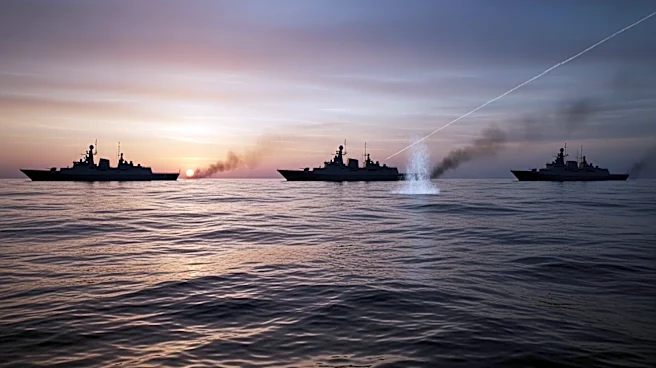
Three container ships were fired upon in the Strait of Hormuz, a critical maritime passage, according to maritime security sources and the United Kingdom Maritime Trade Operations (UKMTO). The incidents occurred amid heightened tensions following a U.S.-Israeli
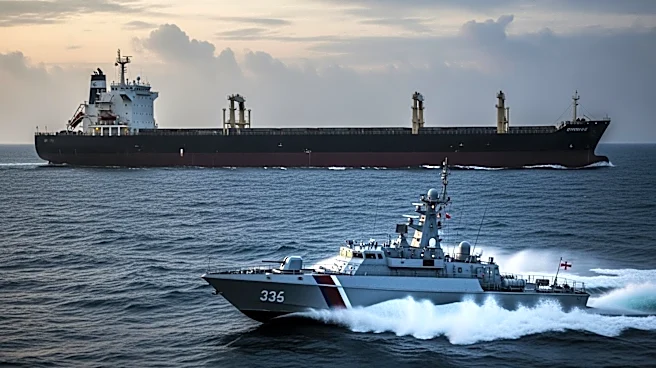
bombardment and a U.S. blockade of Iranian ports. A Liberia-flagged container ship was damaged by gunfire and rocket-propelled grenades, but no crew members were harmed. The UKMTO reported that the vessel was approached by an Iranian Revolutionary Guard Corps (IRGC) gunboat before being fired upon. Two other vessels, a Greek-operated and a Panama-flagged ship, were also targeted but remained undamaged, with all crew members safe. These incidents underscore the volatile security situation in the Strait of Hormuz, a vital corridor for global oil and liquefied natural gas supplies.
Why It's Important?
The Strait of Hormuz is a strategic chokepoint for global energy supplies, handling approximately one-fifth of the world's oil and liquefied natural gas. The recent attacks highlight the geopolitical tensions in the region, which could disrupt international shipping and impact global energy markets. The safety of maritime operations in the strait is crucial for maintaining stable oil prices and ensuring uninterrupted energy supplies. The incidents may lead to increased security measures and heightened military presence in the area, affecting shipping costs and insurance premiums. Stakeholders in the energy sector, including oil companies and shipping firms, are likely to monitor the situation closely, as any escalation could have significant economic repercussions.
What's Next?
In response to the attacks, maritime security protocols may be strengthened, with potential involvement from international naval forces to ensure safe passage through the Strait of Hormuz. Diplomatic efforts could be initiated to de-escalate tensions between Iran and the U.S., aiming to prevent further incidents. Shipping companies might reroute vessels or adjust schedules to mitigate risks, while governments could impose sanctions or engage in negotiations to address the underlying geopolitical issues. The situation remains fluid, and stakeholders will need to stay vigilant as developments unfold.
Beyond the Headlines
The incidents in the Strait of Hormuz reflect broader geopolitical dynamics, including the ongoing conflict between Iran and Western nations. The strategic importance of the strait makes it a focal point for international diplomacy and military strategy. Long-term implications could include shifts in global energy trade routes and increased investment in alternative energy sources to reduce dependency on Middle Eastern oil. The situation also raises ethical questions about the use of military force in international waters and the protection of civilian maritime operations.