



What's Happening?
Iran and Russia are finalizing a protocol to accelerate the joint construction of small modular reactors (SMRs), aiming to boost Iran's low-power nuclear energy infrastructure to meet rising domestic electricity demands. Behrouz Kamalvandi, spokesman
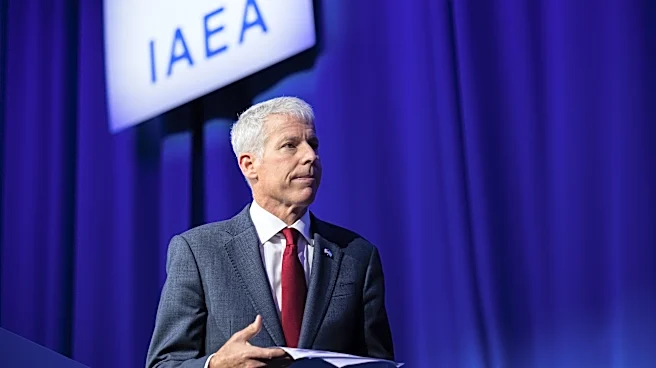
for the Atomic Energy Organisation of Iran (AEOI), confirmed the bilateral agreement. Russia previously assisted Iran in building the Bushehr Nuclear Power Plant, and construction for its second stage is underway. In late September 2025, Iran and Russia signed an agreement for four power units worth $25 billion for the new Hormoz NPP and a memorandum of understanding on SMR cooperation. Meanwhile, an Iranian delegation at the International Ministerial Conference on Nuclear Power, sponsored by the IAEA, reaffirmed Iran's right to peaceful nuclear energy use, criticizing the IAEA for allegedly succumbing to political pressure from the U.S. and Israel regarding Iran's nuclear program.
Why It's Important?
This acceleration in SMR development by Iran and Russia has significant implications for global nuclear non-proliferation efforts and regional stability. The U.S. and its allies have long expressed concerns about Iran's nuclear program, fearing its potential for weaponization. The increased cooperation with Russia, a major nuclear power, could complicate international monitoring and verification efforts by the IAEA. While Iran asserts the peaceful nature of its program, the development of advanced nuclear technologies, even for energy, can raise proliferation concerns if not under stringent international oversight. This move could also deepen the geopolitical alignment between Iran and Russia, potentially challenging Western influence in the Middle East and impacting energy markets. The criticism leveled against the IAEA by Iran further strains relations and could undermine the agency's authority and effectiveness in ensuring nuclear transparency.
What's Next?
The finalization of the protocol between Iran and Russia will likely lead to concrete steps in SMR construction, potentially increasing Iran's nuclear capabilities. The IAEA will face continued pressure to maintain its independent role amidst Iran's accusations of political bias. International bodies and nations concerned about nuclear proliferation will closely monitor these developments, potentially leading to renewed diplomatic efforts or increased sanctions if transparency and verification are not adequately addressed. The ongoing dialogue between Iran and the IAEA, particularly regarding inspection access and the peaceful nature of Iran's program, will be crucial. The expansion of Iran's nuclear infrastructure, even for energy, will necessitate robust safeguards and verification mechanisms to prevent any diversion of nuclear materials.
Beyond the Headlines
The joint SMR project between Iran and Russia highlights a broader trend of non-Western powers collaborating on advanced technological projects, potentially creating alternative geopolitical and economic blocs. This partnership could challenge the existing international order and influence the future of nuclear energy development globally. The debate over the IAEA's impartiality, as raised by Iran, underscores the complex political environment in which nuclear oversight agencies operate. It also brings to light the ethical considerations of military strikes on nuclear facilities, even if perceived as preventative, and their impact on international trust and cooperation. The long-term implications include a potential shift in global energy dynamics and the redefinition of nuclear non-proliferation strategies in a multipolar world.