









What's Happening?
The Royal Australian Navy recently concluded Exercise Dugong 2026, a multinational naval exercise conducted in the Jervis Bay region, aimed at strengthening cooperation in mine warfare, clearance diving, and seabed operations. The exercise brought together
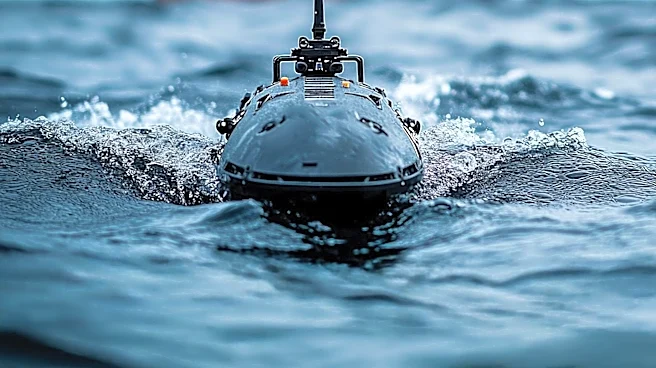
over 350 specialist clearance divers from the Royal Australian Navy, Royal New Zealand Navy, and the U.S. Navy. The activities encompassed a wide range of operations, including mine warfare, clearance diving, maritime explosive ordnance disposal, military geospatial activities, and autonomous underwater vehicle (AUV) operations in both coastal and seabed environments. The Royal Australian Navy led the exercise, which featured the minehunter HMAS Yarra, New Zealand’s HMNZS Matataua, and eight AUVs specifically equipped for mine and mine countermeasure tasks. Exercise director Captain Scott Craig emphasized the importance of capable and adaptable forces in complex maritime environments, highlighting the integration of personnel, technology, and capabilities across the partner navies to support regional maritime security.
Why It's Important?
Exercise Dugong 2026 is crucial for enhancing the interoperability and readiness of the Australian, U.S., and New Zealand navies in a critical domain of maritime security. Mine warfare poses a significant threat to naval operations, commercial shipping, and global trade routes. By conducting joint training and integrating emerging technologies with existing capabilities, these navies are better prepared to address current and future maritime challenges. The participation of the U.S. Navy underscores the strategic importance of this collaboration in maintaining stability and security in the Indo-Pacific region. The exercise also serves to build trust and improve understanding among the forces, which is essential for seamless cooperation during real-world contingencies. The focus on autonomous underwater vehicles signifies a forward-looking approach to mine countermeasure operations, leveraging advanced technology to reduce risks to personnel and increase operational efficiency. This collective effort contributes to a stronger, more coordinated defense posture against potential maritime threats.
What's Next?
The successful conclusion of Exercise Dugong 2026 indicates a continued commitment to multinational naval cooperation and the advancement of mine warfare capabilities. The relationships and operational insights gained during this exercise will likely inform future joint training initiatives and strategic planning among the participating navies. The integration of emerging technologies, particularly AUVs, suggests a trend towards more technologically advanced solutions for mine detection and disposal. The Royal Australian Navy's clearance diving capability, which celebrated its 75th anniversary during this exercise, will continue to play a vital role in maritime and undersea warfare. Future exercises will likely build upon the lessons learned, further refining tactics, techniques, and procedures for operating in complex maritime environments. This ongoing collaboration is essential for ensuring the collective ability to respond effectively to evolving maritime security challenges in the region and beyond.