








What's Happening?
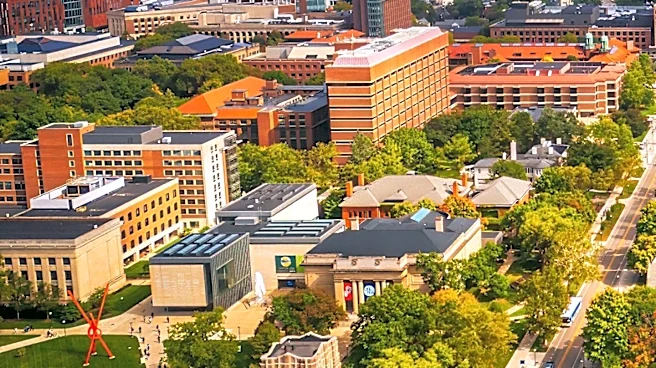
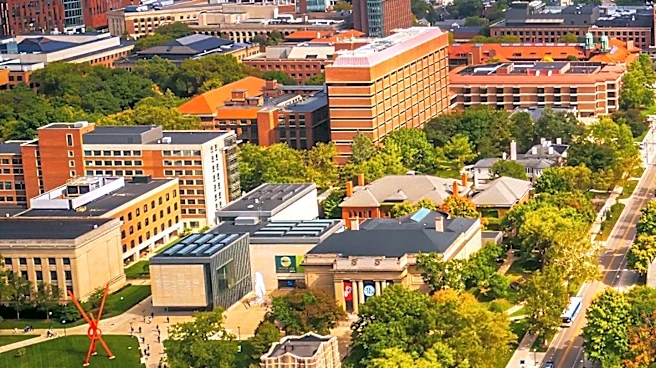
The University of Michigan Wolverines and Michigan State Spartans are engaging in an environmental competition this weekend, hosting a 'Piss Off' event in Ann Arbor. Wastewater research scientists from both universities aim to collect the most urine during
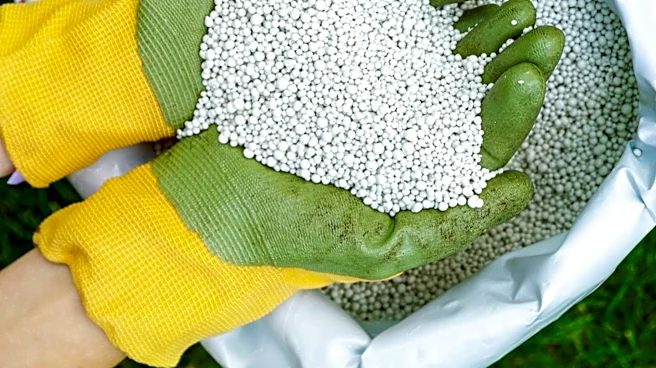
their annual rivalry game. Two yurts will be set up at the Ann Arbor Golf Club, near the Big House, where volunteers will direct fans to contribute. The collected urine will be converted into nutrient-rich fertilizer, a process known as 'peecycling.' The initiative serves a dual purpose: to gather raw material for fertilizer production and to educate the public about the potential of human waste as a sustainable resource. This project is partly funded by a University Research Council Grant awarded to Michigan State Associate Professor of Sociology Stephen Gasteyer and Sociology Assistant Professor Saleh Amed.
Why It's Important?
This collaborative 'peecycling' project between two rival universities highlights an innovative approach to environmental sustainability and resource management. By converting urine into fertilizer, the initiative addresses issues of waste treatment and nutrient recovery, offering a more beneficial alternative to current energy-intensive disposal methods. While the United States currently restricts the use of urine on food crops, its application on other crops like grass and flowers demonstrates a practical use for the recycled nutrients. This project could pave the way for broader acceptance and implementation of 'peecycling' technologies, potentially reducing reliance on synthetic fertilizers and promoting a circular economy within agricultural practices.
What's Next?
The collected urine will be used by Dr. Nancy Love's lab at the University of Michigan to optimize the fertilizer production process. The goal is to make this fertilizer available for use in both University of Michigan and Michigan State University agricultural fields, including Michigan State's Kellogg Biological Center and the University of Michigan's Matthaei Botanical Gardens. The project also aims to introduce a new toilet design that separates urine for both seated and standing users, expected to hit the market later this year. Continued research and public education efforts will be crucial for expanding the adoption of 'peecycling' and overcoming regulatory hurdles for its wider application.
Beyond the Headlines
Beyond its immediate environmental benefits, this 'Piss Off' event challenges societal perceptions of waste and promotes a more open dialogue about sustainable practices. The involvement of two major universities in a public, competitive event like this can significantly raise awareness and encourage community engagement in environmental initiatives. It underscores the potential for interdisciplinary collaboration between sports, science, and public education to address pressing environmental challenges. The project also touches upon the ethical and cultural dimensions of utilizing human waste, pushing boundaries in how resources are viewed and managed in a modern society.