








What's Happening?
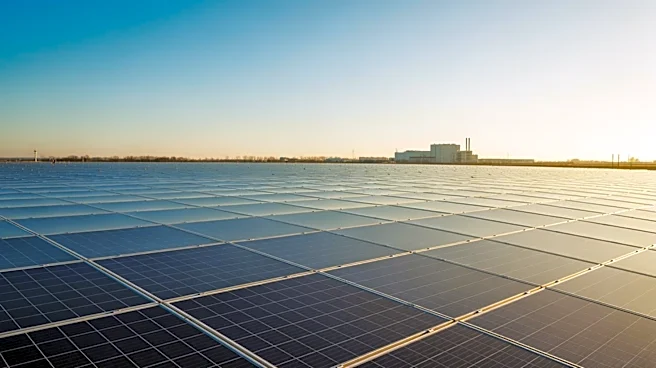
Union Minister of State Jitendra Singh has inaugurated a 200 MW Solar Module Manufacturing Line at Central Electronics Limited (CEL) in India. This facility is a significant addition to India's clean energy infrastructure, enhancing the country's capabilities
in strategic technologies. The event, attended by key figures such as N. Kalaiselvi, Secretary of DSIR, and Chetan Jain, CMD of CEL, marks a milestone in India's renewable energy journey. Singh emphasized the role of renewable energy in India's growth trajectory, aligning with Prime Minister Narendra Modi's vision of achieving net-zero emissions by 2070. The facility reflects India's commitment to expanding its non-fossil energy sectors, including solar, wind, nuclear, and ocean-based systems.
Why It's Important?
The inauguration of this solar manufacturing facility is crucial for India's clean energy ambitions. It signifies a step towards self-reliance in renewable energy technologies, reducing dependency on fossil fuels. This development supports India's goal of net-zero emissions by 2070, a target that aligns with global efforts to combat climate change. The facility also highlights the transformation of CEL from a near-disinvestment entity to a profit-making enterprise, showcasing the potential for economic growth through sustainable practices. The expansion into renewable energy sectors is expected to create jobs, stimulate technological innovation, and enhance India's position in the global clean energy market.
What's Next?
Following the inauguration, India is likely to continue its focus on expanding renewable energy infrastructure. The government may introduce policies to further support domestic manufacturing and innovation in clean energy technologies. Stakeholders, including policymakers and industry leaders, are expected to collaborate on initiatives that promote sustainable development. The success of this facility could lead to similar projects, accelerating India's transition to a low-carbon economy. Additionally, international partnerships may be explored to enhance technological exchange and investment in India's renewable energy sector.
Beyond the Headlines
The establishment of the solar manufacturing line also raises questions about the long-term sustainability of India's energy policies. As the country invests in renewable energy, it must address challenges such as energy storage, grid integration, and the environmental impact of manufacturing processes. The focus on clean energy could drive cultural shifts towards more sustainable lifestyles and increased public awareness of environmental issues. Furthermore, India's progress in renewable energy may influence other developing nations to adopt similar strategies, contributing to global efforts against climate change.