
What's Happening?
AstraZeneca Plc has entered into a significant agreement with CSPC Pharmaceutical Group Ltd., a Chinese company, to pay up to $18.5 billion for obesity drug candidates. This deal includes $1.2 billion for eight
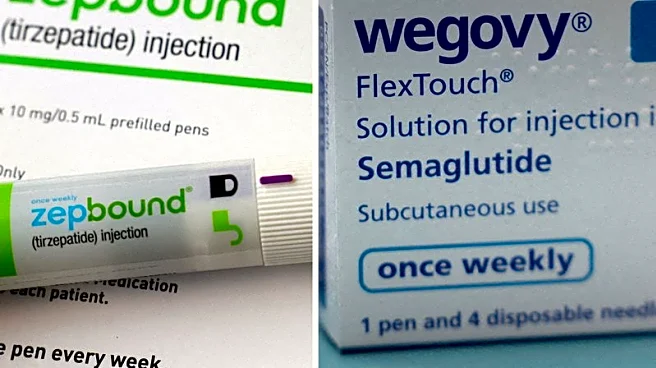
contenders, four of which are injectable therapies aimed at treating obesity and related conditions. AstraZeneca's CEO, Pascal Soriot, emphasized the company's goal to introduce more affordable weight-loss medications that are easier to administer and help maintain muscle mass. The agreement also involves AstraZeneca acquiring rights outside China to CSPC's advanced experimental compound, SYH2082, which is set to enter human trials. This compound mimics gut hormones similar to those in Eli Lilly's Zepbound. The deal grants Astra access to CSPC's peptide technology, potentially enabling monthly dosing, a key target in the competitive weight-loss market.
Why It's Important?
This deal marks a strategic expansion for AstraZeneca into the growing weight-loss market, particularly in China, where obesity rates are rising. The agreement could significantly impact the pharmaceutical industry by introducing new, potentially more effective treatments for obesity. AstraZeneca's focus on less frequent dosing could improve patient adherence, addressing a common issue with current therapies. The investment aligns with broader trends in healthcare, where companies are increasingly targeting lifestyle-related conditions. The deal also highlights the importance of international collaborations in drug development, as AstraZeneca leverages CSPC's technology to enhance its product offerings globally.
What's Next?
AstraZeneca plans to continue expanding its presence in China, with a separate $15 billion investment announced during UK Prime Minister Keir Starmer's visit. The company will likely focus on advancing the development of SYH2082 and other drug candidates acquired through this deal. As the obesity drug market evolves, AstraZeneca may face competition from other pharmaceutical companies, such as Amgen and Pfizer, which are also developing long-acting weight-loss treatments. The success of these initiatives could influence future investments and partnerships in the healthcare sector.