







What's Happening?
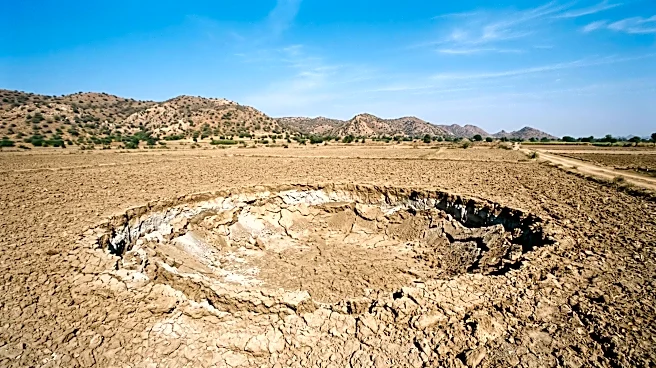
Residents of Sehsola village in Nuh district, India, are demanding an immediate halt to the construction of a tunnel for the Haryana Orbital Rail Corridor (HORC) after a section of the ground caved in. The incident, which occurred over an under-construction
tunnel in the Aravalli foothills, saw soil sink across a 20-meter radius in a field. While no one was injured, villagers reported that a tractor-trolley had passed through the spot shortly before the collapse. In a written complaint to the Nuh Deputy Commissioner, villagers alleged that the subsidence has damaged farmland and caused cracks in houses and foundations, posing a threat to life. They claim safety norms are being violated at the tunnel site, citing inadequate soil support, lack of safety equipment, and unannounced blasting. They have requested a committee of district administration, Revenue and PWD officials, an independent geotechnical expert, and HORC representatives to investigate the cause, including potential faulty design or poor soil investigation. Police arrived at the scene, but company officials reportedly took nearly 24 hours to appear.
Why It's Important?
This incident highlights critical concerns regarding infrastructure development and public safety in rapidly expanding regions. The allegations of violated safety norms and potential structural deficiencies in a major rail corridor project underscore the importance of stringent oversight and accountability in large-scale construction. The reported damage to farmland and residential properties, along with the perceived threat to life, can lead to significant economic losses for local communities and erode public trust in development initiatives. Furthermore, the delay in response from construction company officials and the ongoing dispute over land acquisition compensation suggest broader issues in stakeholder engagement and corporate responsibility. If not addressed effectively, such incidents can lead to prolonged project delays, increased costs, and potential legal battles, impacting the overall economic viability and social acceptance of essential infrastructure projects.
What's Next?
Villagers have stated they will not allow work to resume until they receive complete assurance on safety and compensation for their losses. The Nuh Deputy Commissioner, Akhil Pilani, has acknowledged the matter and stated that an inquiry will be ordered, with concerned officials informed. Railway and construction company officials who visited the site indicated that a technical inspection would be carried out, the sunken portion filled, and warning boards and barricading installed. The villagers have also requested their complaint be forwarded to the police to examine any criminal aspects related to the incident. The outcome of the independent technical probe and the district administration's inquiry will be crucial in determining the future course of the HORC tunnel project and addressing the community's concerns regarding safety and compensation.
Beyond the Headlines
The incident in Nuh district reflects a recurring challenge in developing nations where rapid infrastructure expansion often clashes with environmental concerns and community well-being. The Aravalli foothills, a sensitive ecological zone, may face long-term environmental impacts from such large-scale tunneling and blasting activities if proper geological assessments and mitigation measures are not rigorously implemented. The villagers' claims of unannounced blasting and lack of warning boards also point to a potential disregard for local residents' daily lives and safety, raising ethical questions about the balance between developmental progress and human rights. This situation could set a precedent for how future large infrastructure projects in ecologically sensitive or densely populated areas are managed, emphasizing the need for transparent communication, robust environmental impact assessments, and genuine community engagement to prevent similar conflicts and ensure sustainable development.