





What's Happening?
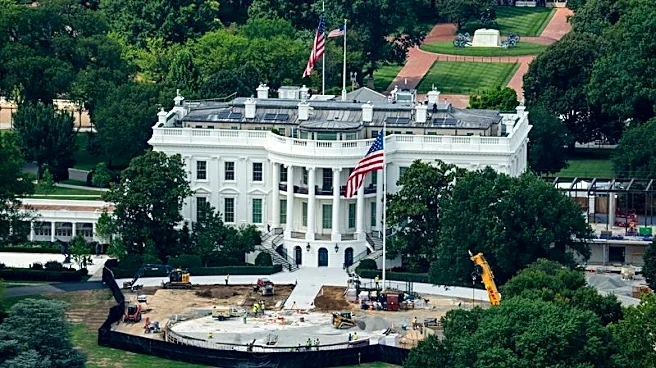
Lawyers for the National Trust for Historic Preservation have formally requested the Supreme Court to maintain a federal court ruling that temporarily halts the construction of a new ballroom at the White House. The Trust argues that only Congress possesses
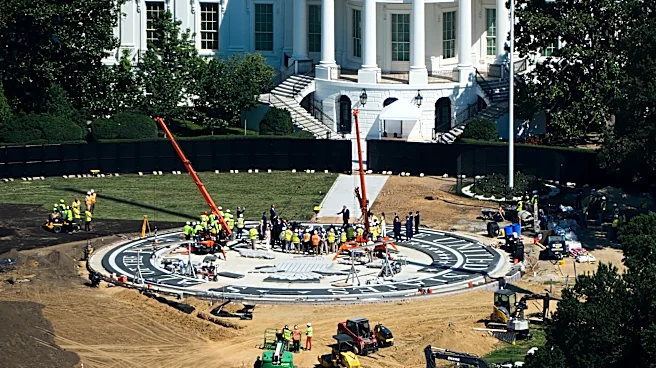
the authority to regulate the construction and demolition of White House structures, and no congressional approval or funding has been granted for this specific ballroom project. Senior U.S. District Judge Richard Leon's initial order, which would have paused above-ground construction, has not yet taken effect due to appeals by the Trump administration. Despite the ongoing legal challenges, the Trump administration informed the court that the project is approximately 65% complete and is rapidly progressing toward total completion. The administration announced the plan in July 2025, citing a long-standing need for a larger event space at the White House complex. The National Trust for Historic Preservation initiated legal action in December, seeking to pause construction until the National Capital Planning Commission and the Commission of Fine Arts could review and approve the plans, and Congress could authorize the project.
Why It's Important?
This legal battle highlights a significant constitutional question regarding the separation of powers and the authority over federal property, particularly a historic landmark like the White House. The National Trust for Historic Preservation emphasizes that allowing construction to proceed without congressional approval would inflict "irreversible historical-preservation, architectural, and visual damage." This case sets a precedent for how future administrations might undertake modifications to the White House and other federal properties, potentially impacting the role of Congress in overseeing such projects. The Trump administration's argument that the project is an "integrated military complex" and "vitally required by national security" raises questions about the scope of executive power in matters of construction on federal land. The outcome will determine whether the executive branch can bypass legislative oversight for significant structural changes to the White House, potentially altering the balance of power and the preservation of national heritage.
What's Next?
The Supreme Court will now consider the National Trust for Historic Preservation's request to uphold the lower court's order blocking the ballroom construction. The Trump administration has already urged the justices to put Leon's order on hold, labeling it "extraordinary and unlawful." The administration contends that the Trust lacks the legal standing to sue, arguing that their claims are based on a mere "dislike" of the new construction, which is not a sufficient injury to warrant a lawsuit. The Trust, however, maintains that the injunction specifically targets the construction of a ballroom without prior congressional approval, allowing other security-related work to continue. If the Supreme Court denies the Trump administration's request to pause the order, construction on the ballroom would be halted. The Trust has also indicated it would not oppose an expedited review of the merits of the dispute by the Supreme Court, potentially leading to oral arguments in October or November.
Beyond the Headlines
Beyond the immediate legal and political implications, this case touches upon the broader issue of historical preservation versus modernization and security needs within national landmarks. The White House, as a symbol of American democracy and history, is subject to unique considerations regarding its physical integrity and public access. The debate over the ballroom's construction underscores the tension between an administration's desire for functional improvements and the public's interest in preserving historical and architectural heritage. The National Trust's involvement highlights the role of non-profit organizations in safeguarding national treasures against potentially unauthorized alterations. The outcome could influence future policies on the renovation and expansion of other historic federal buildings, potentially leading to more stringent oversight requirements for projects that could impact their historical or architectural significance. The argument of "national security" being tied to a ballroom also raises questions about the justification and transparency of such claims in public works projects.