



What's Happening?
The National Oceanic and Atmospheric Administration (NOAA) has released its 20th Arctic Report Card, revealing significant environmental changes in the Arctic region. The report, compiled by around 100 scientists globally, indicates that the last decade
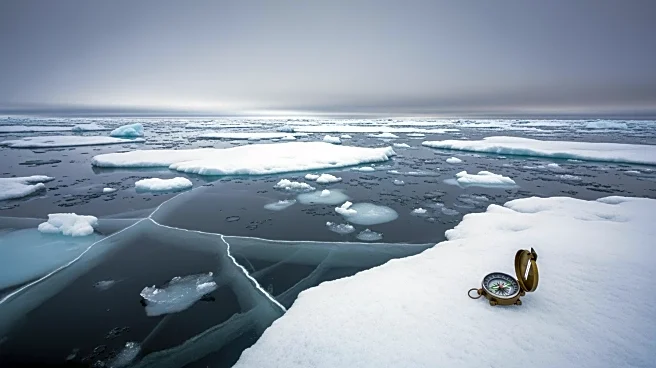
has been the warmest on record for the Arctic. Warm Atlantic waters are encroaching into the central Arctic Ocean, accelerating sea ice loss. This reduction in ice, which traditionally reflects sunlight, is contributing to further warming. Additionally, the thawing of Arctic permafrost is releasing more carbon dioxide, exacerbating global warming. The report also notes changes in precipitation patterns, with the Arctic experiencing its highest levels since 1950, leading to more extreme weather events. Sea surface temperatures have reached record highs, and the extent of sea ice has significantly decreased, with the oldest and thickest ice declining by over 95% since the 1980s. These changes are not only affecting the Arctic but have global implications, as the region acts as a critical component of Earth's climate system.
Why It's Important?
The findings of the NOAA report underscore the critical role the Arctic plays in global climate regulation. The rapid environmental changes in the region have far-reaching implications, potentially affecting weather patterns, sea levels, and biodiversity worldwide. The loss of Arctic ice and permafrost contributes to rising global temperatures and sea levels, which can lead to more frequent and severe weather events. These changes pose significant challenges for policymakers, environmentalists, and industries reliant on stable climate conditions. The report highlights the urgent need for increased climate science funding and international cooperation to address these challenges. The Arctic's transformation serves as a stark reminder of the broader impacts of climate change, emphasizing the need for immediate and sustained action to mitigate its effects.
What's Next?
The report's release comes at a time when climate science funding in the U.S. faces uncertainty. Continued support for Arctic research is crucial to understanding and mitigating the impacts of climate change. The findings may prompt renewed calls for policy action and international collaboration to address the environmental challenges highlighted in the report. Stakeholders, including governments, environmental organizations, and the scientific community, are likely to advocate for increased investment in climate research and the development of strategies to reduce greenhouse gas emissions. The report may also influence public awareness and drive demand for sustainable practices and policies aimed at preserving the Arctic and mitigating global climate change.
Beyond the Headlines
The Arctic's environmental decline raises ethical and cultural questions, particularly for indigenous communities whose livelihoods and traditions are closely tied to the region's natural environment. The changes in the Arctic ecosystem could lead to shifts in species distribution, affecting local food sources and cultural practices. Additionally, the report highlights the interconnectedness of global ecosystems, emphasizing the need for a holistic approach to environmental conservation. The Arctic's transformation serves as a warning of the potential long-term consequences of climate change, underscoring the importance of integrating scientific research with policy and cultural considerations to develop effective solutions.