




What's Happening?
Jamaica has been elected to the Council of the International Telecommunication Union (ITU) for the 2027-2030 term, marking its return after a 37-year absence since 1989. The election took place during the ITU Plenipotentiary Conference 2026 in Doha, Qatar,
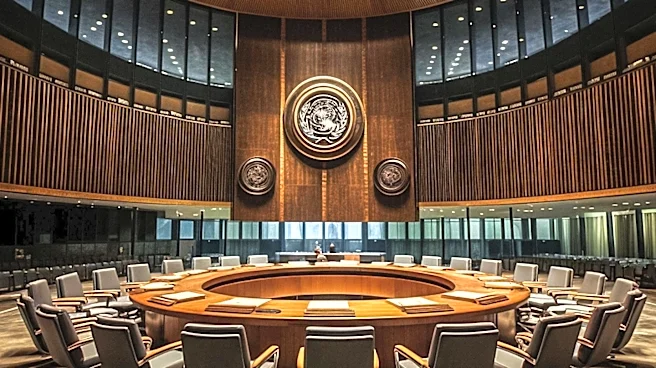
where Jamaica secured 158 out of 175 votes. Representing Region A (the Americas), Jamaica's Telecommunications Minister Daryl Vaz stated that this appointment positions the country to advocate for smaller nations within the global telecommunications framework. The ITU, a specialized agency of the United Nations established in the late 1800s, is responsible for various aspects of information and communication technologies. As a Council member, Jamaica will play a role in shaping the ITU's strategic direction, policies, and oversight of its activities, with a particular focus on advancing the priorities of small island developing states. This election underscores Jamaica's commitment to international cooperation and its dedication to fostering a connected, inclusive, secure, and resilient digital future.
Why It's Important?
Jamaica's re-entry into the ITU Council is significant for several reasons. For small island developing states (SIDS), it provides a crucial voice in international digital governance and policy-making. These nations often face unique challenges in telecommunications infrastructure, digital access, and resilience to climate-related disruptions, making their representation vital in global forums. Jamaica's position will allow it to champion policies that address these specific needs, potentially leading to more equitable distribution of resources and technological advancements. Furthermore, this move reinforces Jamaica's commitment to multilateralism and its desire to actively participate in shaping the global digital landscape. For the broader international community, having diverse voices, especially from regions often underrepresented, can lead to more comprehensive and inclusive digital policies that benefit a wider range of populations, ultimately contributing to bridging the global digital divide.
What's Next?
As a member of the ITU Council from 2027 to 2030, Jamaica will actively contribute to the ITU's strategic direction and policy formulation. This will involve participating in discussions and decisions related to international telecommunications standards, radio spectrum coordination, digital technology policy, and telecommunications development initiatives. Telecommunications Minister Daryl Vaz is expected to lead Jamaica's delegation in advocating for the interests of smaller countries, particularly small island developing states, ensuring their perspectives are considered in global digital agendas. Jamaica will likely focus on promoting affordable access to telecommunications, enhancing digital connectivity, and building resilience in digital infrastructure. The country's engagement will also involve collaborating with other member states to foster international cooperation and advance a more inclusive and secure global digital environment.
Beyond the Headlines
Jamaica's return to the ITU Council after nearly four decades highlights a broader trend of developing nations seeking greater influence in global technological governance. This move is not just about a seat at the table; it signifies a strategic effort by Jamaica to ensure that the digital future is shaped with the needs and vulnerabilities of smaller economies in mind. It could inspire other developing nations to pursue more active roles in international bodies, fostering a more multipolar and representative global governance structure for digital technologies. The emphasis on advocating for small island developing states also underscores the growing recognition of climate change's impact on digital infrastructure and the need for resilient solutions, which could become a key area of focus for Jamaica's tenure. This could lead to increased international collaboration on climate-resilient digital infrastructure projects and policies.