










What's Happening?
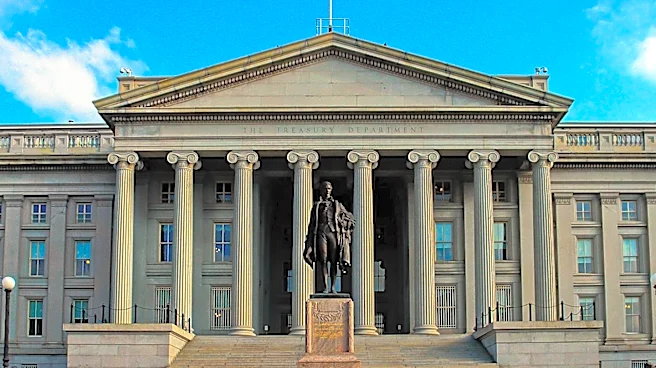
The U.S. Department of the Treasury is currently accepting applications for the position of Chief Privacy Officer within the Internal Revenue Service (IRS). This role is crucial for maintaining public confidence by ensuring the protection, retention,
and disclosure of taxpayer information. The Chief Privacy Officer will provide executive leadership over the Privacy organization, establishing strategic directions for compliance with various federal regulations, including the Freedom of Information Act and the Internal Revenue Code. The position is based in Washington, DC, and Philadelphia, PA, with a salary range of $151,661 to $228,000 per year. The role requires a top-secret security clearance and involves occasional travel. The application deadline is July 30, 2026.
Why It's Important?
The appointment of a Chief Privacy Officer is significant for the IRS as it underscores the agency's commitment to safeguarding taxpayer information and enhancing data security. This role is pivotal in preventing identity theft and tax refund fraud, which are critical issues affecting both taxpayers and the integrity of the U.S. financial system. By ensuring compliance with privacy regulations and implementing effective data protection strategies, the Chief Privacy Officer will play a key role in maintaining public trust in the IRS and the broader financial system. This position also highlights the increasing importance of data security in government operations, reflecting broader trends in privacy and information protection.
What's Next?
The selected candidate will be responsible for developing and implementing a comprehensive privacy and data security strategy for the IRS. This includes establishing an Incident/Data Loss Response Plan and collaborating with other public-sector agencies and private industry to enhance the IRS's ability to prevent identity theft and tax refund fraud. The Chief Privacy Officer will also conduct an IRS-wide risk assessment to identify vulnerabilities and develop mitigation strategies. The role will require ongoing adaptation to emerging security risks and technological advancements to ensure the continued protection of sensitive information.