




What's Happening?
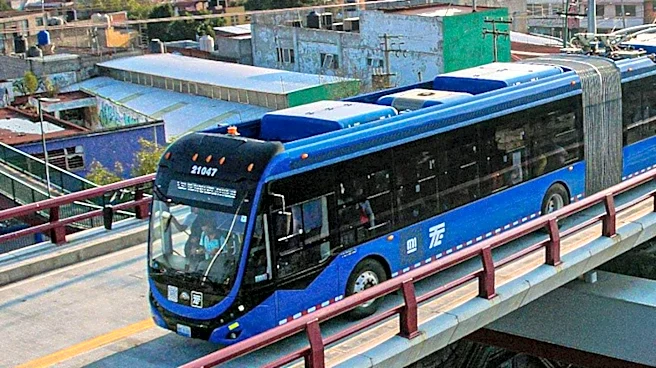
Latin America has reached a significant milestone with 10,000 electric buses now operating across 80 cities in 13 countries. This achievement, confirmed by E-Bus Radar and announced by C40 Cities and the International Council on Clean Transportation,
marks a major step in reducing urban transport emissions. Cities like São Paulo, Santiago, and Bogotá are leading the transition, collectively operating over 7,000 electric buses. The initiative is part of a broader effort to improve air quality and reduce carbon emissions, supported by programs such as the ZEBRA Alliance and the Mutirão Brazil Programme.
Why It's Important?
The deployment of electric buses in Latin America represents a significant advancement in sustainable urban transport. This transition not only reduces carbon emissions but also improves air quality, benefiting public health and the environment. The success of this initiative demonstrates the viability of large-scale electrification of public transport, providing a model for other regions. The involvement of international organizations and financial institutions highlights the importance of collaboration in achieving environmental goals.
What's Next?
The momentum for electric bus deployment is expected to continue, with cities like Salvador, Recife, and Belo Horizonte advancing their electrification projects. The success of São Paulo's financing model, which combines regulatory requirements with investment packages, serves as a template for other cities. As financing models mature and cooperation between government levels deepens, the pace of electrification across Latin America is likely to accelerate, further reducing emissions and enhancing public transport systems.