





What's Happening?
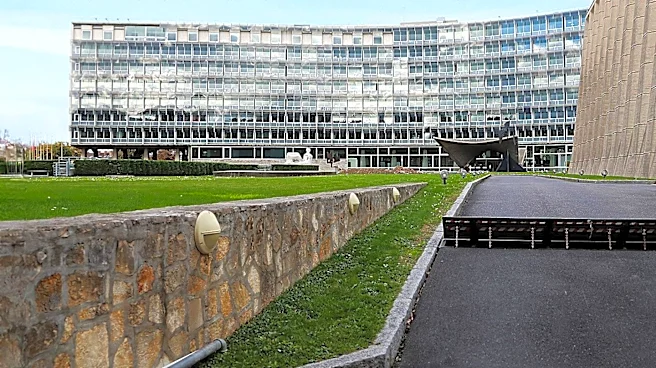
The United Nations Educational, Scientific and Cultural Organization (UNESCO) recently hosted the 4th Chief Science Advisors Roundtable (CSAR) at its headquarters in Paris. The event, organized in partnership with UNESCO and the Ministry of Science, Technology,
and Innovation of South Africa, with support from the Government of India, convened chief science advisors, representatives of scientific advisory mechanisms, and international organizations from various countries. The primary objectives of the meeting were to facilitate the translation of scientific knowledge into public policy, strengthen trust in scientific advising, and foster international cooperation. Key discussions revolved around ensuring diverse knowledge sources and societal groups are represented in scientific advising, guaranteeing transparency in evaluating scientific evidence, and addressing the opportunities and risks presented by artificial intelligence. The meeting, held under the theme 'Trusted Advice in a World of Plural Knowledge,' included panels on the role of information sources in scientific advisory processes, maintaining trust amidst uncertainty and emerging technologies, and the importance of youth participation in shaping future scientific advice. TÜBA President Prof. Dr. Muzaffer Şeker represented Türkiye, outlining the country's approach to strengthening scientific advisory mechanisms and inviting the international scientific community to the World Science Forum (WSF 2027) in Istanbul.
Why It's Important?
This UNESCO-led initiative is crucial for the global scientific community and has significant implications for how scientific advice informs policy-making worldwide. By focusing on strengthening trust in scientific advising and promoting international cooperation, the roundtable aims to enhance the reliability and inclusivity of scientific input into critical global challenges. The emphasis on incorporating diverse knowledge sources, including local and regional experiences, ensures that policy decisions are well-rounded and consider a broader spectrum of perspectives. This is particularly vital in an era where complex issues like climate pressures, energy transition, and humanitarian crises require multifaceted solutions that cannot be addressed by a single field of expertise. Furthermore, addressing the impact of artificial intelligence on scientific advisory processes is paramount, as AI presents both opportunities for enhanced analysis and risks related to data sources, accountability, and misinformation. The discussions at CSAR contribute to developing robust, equitable, and future-ready scientific advisory systems, which are essential for effective governance and societal well-being globally.
What's Next?
The discussions and outcomes from the 4th Chief Science Advisors Roundtable are expected to inform future strategies for scientific advisory mechanisms globally. The draft Chair's Summary, presented at the conclusion of the closed session, will likely guide member states and international organizations in adapting their scientific advisory systems and strengthening international cooperation. Türkiye's invitation to the international scientific community for the World Science Forum (WSF 2027) in Istanbul signifies a continued commitment to fostering global collaboration and institutionalizing scientific ethics and the science-policy interface. This forum will serve as a platform for further dialogue and action on the themes discussed at CSAR, aiming to ensure that scientific evidence remains a universal compass for human dignity and peace. Future efforts will likely focus on implementing transparent evaluation processes for scientific evidence, managing scientific uncertainties honestly, and combating information pollution to safeguard the integrity of scientific advice.
Beyond the Headlines
The emphasis on 'Trusted Advice in a World of Plural Knowledge' at the UNESCO roundtable highlights a deeper shift in how scientific expertise is perceived and integrated into policy. It acknowledges that traditional, singular sources of scientific authority may no longer be sufficient to address complex global challenges. The call for inclusivity, incorporating local knowledge bases and diverse societal groups, reflects a move towards a more democratic and holistic approach to science policy. This also touches upon ethical considerations regarding who determines research questions and which actors have a say in decision-making, promoting a more equitable distribution of influence in scientific governance. The discussions on artificial intelligence underscore the evolving ethical landscape of scientific advice, particularly concerning data integrity, algorithmic bias, and the potential for misinformation. Safeguarding scientific integrity against the misuse of expert opinions and ensuring transparency in evidence evaluation are critical for maintaining public trust in science, which is fundamental for societal progress and stability in an increasingly complex world.