







What's Happening?
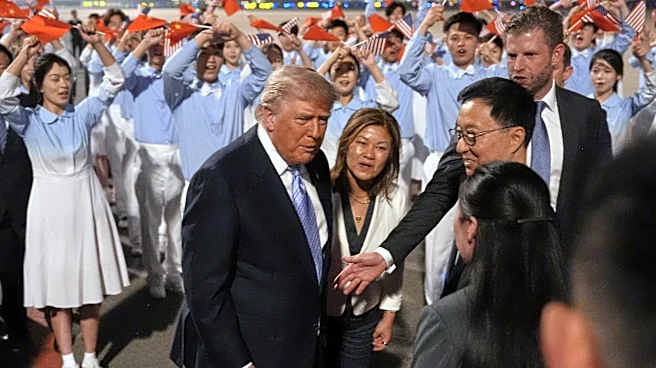
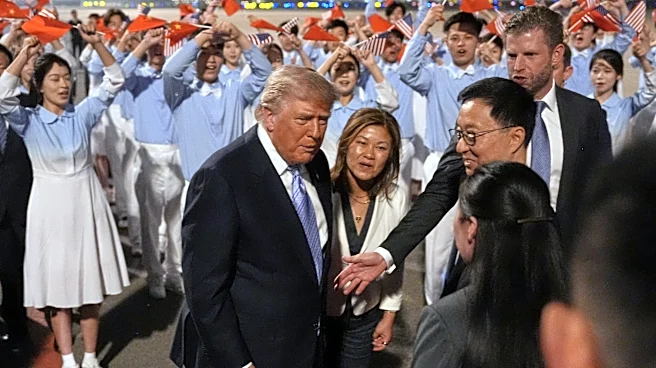
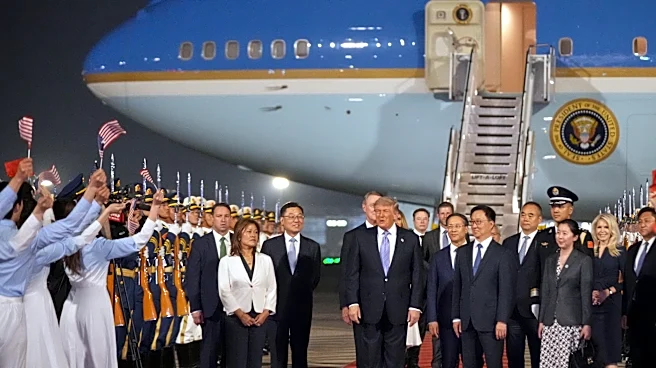
President Donald Trump and Chinese President Xi Jinping met in Beijing for a summit characterized by elaborate ceremonies but limited expectations for substantial breakthroughs. The meeting highlighted significant differences between the two leaders,
particularly concerning Taiwan, trade, and the ongoing conflict in Iran. Xi Jinping issued a stern warning to President Trump about the potential for conflict over Taiwan, emphasizing its critical importance in China-U.S. relations. Despite the tensions, both leaders expressed a desire to improve bilateral relations, with discussions touching on economic cooperation and market access. The summit also addressed the impact of the Iran war on global economies, with Trump urging China to leverage its influence over Iran.
Why It's Important?
The summit between President Trump and Xi Jinping is crucial as it addresses several pressing issues affecting global stability and economic relations. The discussions on Taiwan are particularly significant, given the island's strategic importance and the U.S.'s commitment to its defense. The potential for conflict over Taiwan could have far-reaching implications for international relations and regional security. Additionally, the economic discussions are vital as both nations seek to navigate the complexities of trade amidst the backdrop of the Iran conflict, which has disrupted global oil supplies and economic growth. The outcomes of this summit could influence future U.S.-China relations and impact global markets.
What's Next?
Following the summit, both nations are expected to continue negotiations on trade and economic cooperation. The U.S. aims to secure commitments from China to purchase more American goods, which could help balance trade deficits. Additionally, the ongoing situation in Iran and its impact on global oil markets will likely remain a focal point for both countries. The U.S. may continue to press China to exert its influence over Iran to stabilize the region. The handling of Taiwan will also be closely monitored, as any changes in U.S. policy could alter the geopolitical landscape in Asia.