



What's Happening?
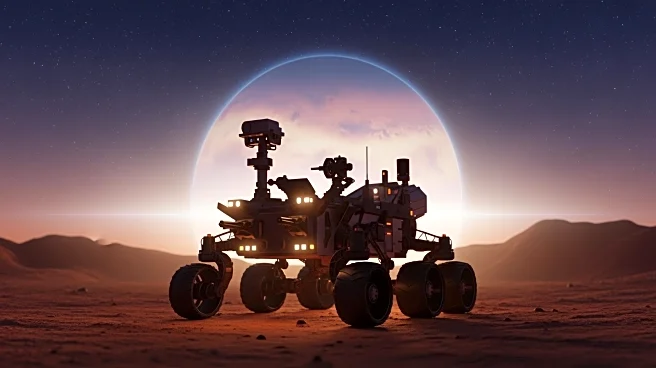
NASA is utilizing robotic missions to address the challenges of human exploration on Mars. These missions are crucial in understanding the Martian environment, including radiation levels, water locations, and the effects of dust. Robots like the Mars rovers
and orbiters are gathering data to inform future human missions. For instance, the MAVEN mission has provided a comprehensive catalog of Martian space weather events, aiding in the planning of safe human activities on the planet. Additionally, NASA is developing tools to monitor space weather in real-time, which will be essential for astronaut safety during solar storms. These efforts highlight the collaborative role of robots and humans in space exploration.
Why It's Important?
The use of robotic missions is vital for the success of future human exploration on Mars. By addressing environmental challenges such as radiation and dust, NASA is ensuring that astronauts can safely live and work on the Martian surface. The data collected by these missions will guide the development of habitats and daily routines for astronauts, minimizing risks and maximizing efficiency. This approach not only enhances the safety of human missions but also optimizes resource allocation and mission planning. The integration of robotic and human efforts represents a significant advancement in space exploration, paving the way for sustainable human presence on Mars.