







What's Happening?
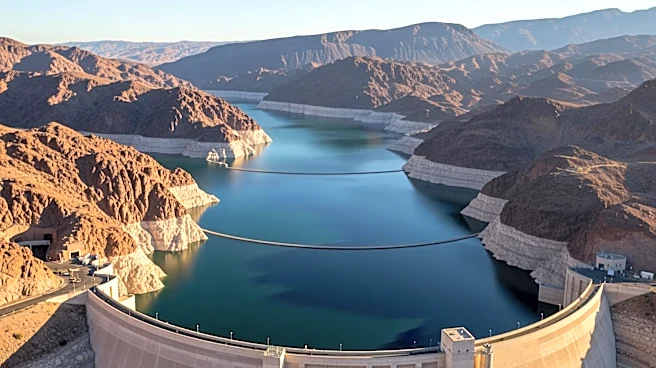
Arizona, California, and Nevada have announced a temporary plan to conserve up to 1 million acre-feet of water from the Colorado River through 2028. This initiative is in response to the driest winter on record and aims to support the river's reservoirs,
which are crucial for water supply and hydropower. The plan, which requires federal and state approval, is part of a broader effort to save 3.2 million acre-feet of water, enough to serve over 25 million people annually. The U.S. Bureau of Reclamation is also releasing more water into Lake Powell to maintain hydropower production. The agreement is seen as ambitious, benefiting the entire river basin, which supports 40 million people across seven U.S. states, two Mexican states, and Native American tribes. However, negotiations for a long-term solution have stalled, with some states calling for a mediator.
Why It's Important?
The Colorado River is a vital water source for millions of people and numerous industries, including agriculture, which relies heavily on its water for irrigation. The temporary conservation plan highlights the urgent need to address chronic overuse and the impacts of climate change, such as drought and rising temperatures. The health of the river is critical for maintaining water supply and hydropower, which supports hundreds of thousands of homes. The plan's success could set a precedent for future water management strategies in the region. However, the lack of a long-term agreement poses risks, as continued water shortages could lead to increased costs for residents and businesses, and potentially disrupt agricultural production.
What's Next?
Federal officials are reviewing the Lower Basin's proposal while seeking a broader agreement. The Upper Basin states have expressed concerns that the plan does not adequately protect Lake Powell and are advocating for a mediator to facilitate negotiations. The ongoing drought and water shortages necessitate a collaborative approach to ensure sustainable water management. The outcome of these discussions will have significant implications for water policy and resource allocation in the region.