






What's Happening?
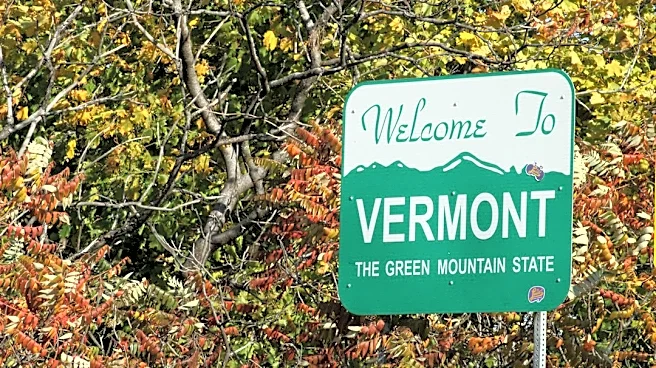
A recent University of New Hampshire Green Mountain State Poll indicates that Vermont Governor Phil Scott is trailing his Democratic opponent, Amanda Janoo, by six percentage points in the upcoming gubernatorial election. The poll, released last week,
shows Janoo with 49% support among Vermonters, compared to Governor Scott's 43%. This 6% margin has led UNH pollsters to categorize the race as a 'statistical tie.' Notably, this represents a significant 21-point swing since a July poll by the same group, which had Scott leading Janoo by 15%. Governor Scott's campaign manager, Dustin Degree, has criticized the UNH poll's methodology, particularly its partisan split, noting that 60% of those surveyed identified as Democrats, 31% as Republicans, and 9% as Independents. Degree also pointed out that a 2024 UNH poll had predicted a 28% margin of victory for Scott, who ultimately won reelection by over 50%.
Why It's Important?
This poll suggests a potentially tight and competitive gubernatorial race in Vermont, a state where Governor Scott has historically enjoyed significant bipartisan support. A shift in voter sentiment, as indicated by the 21-point swing, could signal a broader dissatisfaction with the incumbent's recent actions, particularly his vetoes of progressive bills. For the Democratic Party, Janoo's strong showing, especially as a first-time political candidate and economist, could represent an opportunity to gain control of the governorship. The outcome of this election could influence the legislative agenda in Vermont, potentially leading to a different approach on issues such as healthcare costs, environmental regulations, and educational policies. The criticism of the poll's methodology also highlights ongoing debates about the accuracy and representativeness of political polling, which can impact campaign strategies and public perception.
What's Next?
As the November election approaches, both Governor Scott and Amanda Janoo's campaigns are expected to intensify their efforts. Janoo's team views the poll results as validation of their grassroots campaign and a reflection of Vermonters' desire for change, suggesting they will continue to emphasize a message of hope and new leadership. Governor Scott's campaign, while dismissing the poll as 'statistical malpractice,' will likely focus on mobilizing their base and addressing the concerns that may have contributed to his decreased approval rating. The accuracy of future polls and the effectiveness of each campaign's messaging in the coming weeks will be crucial in shaping voter opinion. The election will also determine the political landscape for other state races, including the lieutenant governor and congressional seats, which are also showing shifts in support according to the same poll.
Beyond the Headlines
The significant shift in voter sentiment reflected in the poll, particularly against an incumbent with a history of bipartisan support, could indicate a deeper trend of political polarization or a growing demand for progressive policies in Vermont. Governor Scott's vetoes of progressive bills, while potentially appealing to a conservative base, appear to have alienated a segment of the electorate. This dynamic underscores the challenge for moderate politicians in an increasingly polarized political environment. Furthermore, the debate over the poll's methodology raises questions about public trust in political surveys and the potential for such data to influence narratives, regardless of their accuracy. The outcome of this election could serve as a case study for how states balance traditional political allegiances with evolving voter expectations and the impact of specific policy decisions on an incumbent's electability.