





What's Happening?
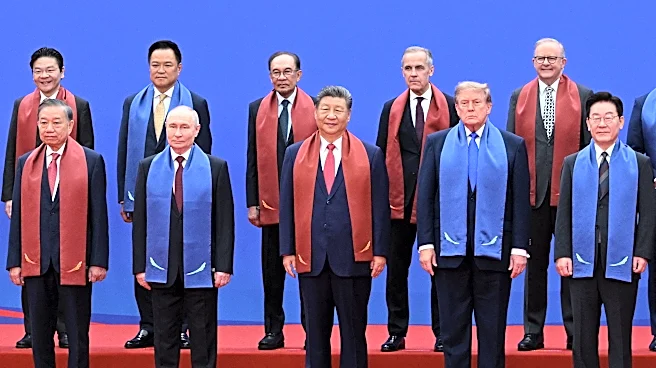
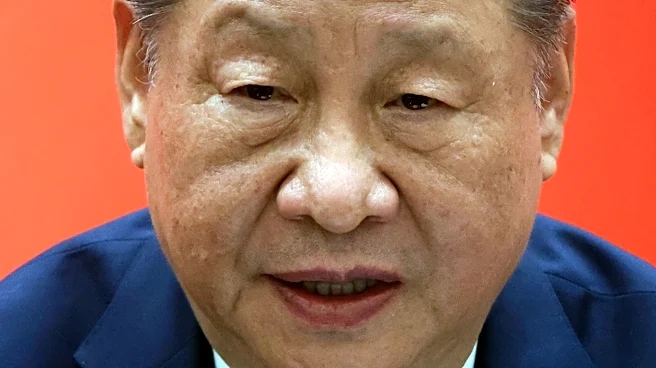
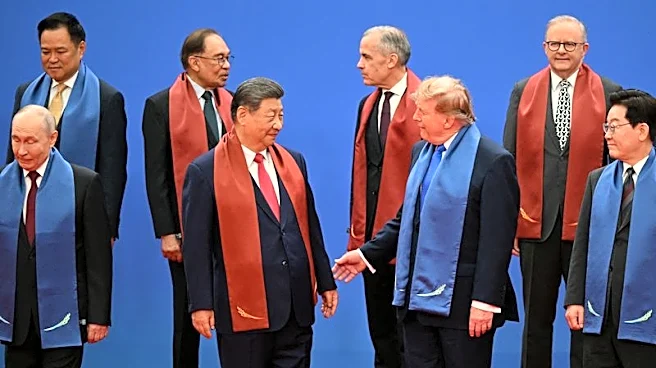
Chinese President Xi Jinping chaired the 33rd APEC Economic Leaders’ Meeting, calling for deeper regional economic integration, freer trade, and new sources of growth amidst a global economic slowdown. President Xi emphasized the importance of upholding
open regionalism and building an Asia-Pacific community characterized by solidarity and mutual assistance. He likened member economies to passengers on the same ship, stressing the need for unity to navigate challenges. Key proposals included advancing the Free Trade Area of the Asia-Pacific (FTAAP) by aligning trade agreements, promoting greater trade digitalization, reducing investment barriers, and enhancing capacity building for economies to participate in high-standard arrangements. President Xi also highlighted the need for improved physical and people-to-people connections through better infrastructure, smarter customs, and aligned policies. He identified the digital economy and artificial intelligence as crucial for innovation-driven growth, advocating for stronger digital infrastructure and cooperation on data governance. Additionally, he called for regional cooperation on energy and food security and deeper cross-border anti-corruption governance.
Why It's Important?
President Xi's call for enhanced regional economic integration and freer trade within APEC holds significant implications for the U.S. and global economic landscape. As a major economic power and APEC member, the U.S. stands to be directly affected by any shifts towards greater trade digitalization, reduced investment barriers, and alignment of trade agreements in the Asia-Pacific. Increased economic integration could present both opportunities for U.S. businesses seeking expanded market access and challenges from heightened competition. The emphasis on digital economy and artificial intelligence also signals a potential acceleration in technological development and adoption across the region, which could influence U.S. innovation and competitiveness. Furthermore, calls for cooperation on energy, food security, and anti-corruption governance reflect broader global challenges that require multilateral solutions, impacting international stability and supply chains that the U.S. relies upon. The push for open regionalism could also influence ongoing debates within the U.S. regarding trade policies and international partnerships.
What's Next?
Following President Xi's address, APEC member economies are expected to deliberate on the proposed initiatives for deeper regional economic integration and freer trade. Discussions will likely focus on practical steps to align trade agreements, implement greater trade digitalization, and reduce investment barriers. Member states, including the U.S., will need to assess how these proposals align with their national economic interests and existing trade policies. There may be further dialogues on strengthening digital infrastructure and cooperation on data governance, potentially leading to new frameworks or agreements. The emphasis on energy and food security, along with anti-corruption governance, suggests that future APEC agendas will continue to prioritize these areas, potentially leading to collaborative projects or policy recommendations. The broader context of global economic slowdown and geopolitical dynamics will likely influence the pace and scope of these cooperative efforts, with member economies seeking to balance regional integration with national priorities.
Beyond the Headlines
President Xi's strong advocacy for open regionalism and an integrated Asia-Pacific community carries deeper implications beyond immediate economic benefits. It signals a strategic vision for the region that could reshape global trade dynamics and influence the balance of economic power. The call for unity and mutual assistance, framed as navigating waves together, suggests a desire to foster a more cohesive regional bloc, potentially challenging existing global economic structures. The focus on digital economy and AI as engines of growth highlights the increasing importance of technological leadership in international relations, potentially intensifying competition in these sectors. Furthermore, the emphasis on cross-border anti-corruption governance touches upon broader issues of transparency and good governance, which can have long-term effects on investment climates and international trust. This push for deeper integration could also lead to a re-evaluation of supply chain resilience and diversification strategies for businesses operating in the region, including those with U.S. ties.