
What's Happening?
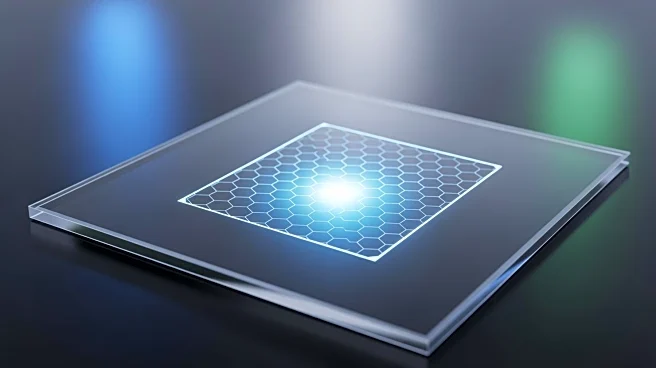
Physicists at the University of Colorado Boulder have developed a new material for insulating windows, called Mesoporous Optically Clear Heat Insulator (MOCHI), which aims to improve the energy efficiency
of buildings worldwide. This innovative material functions similarly to a high-tech version of Bubble Wrap, allowing light to pass through while blocking heat. MOCHI is composed of a silicone gel that traps air through a network of tiny pores, effectively insulating without obstructing visibility. The material is currently produced in the lab and is not yet available for consumer use. However, researchers claim that MOCHI is long-lasting and nearly transparent, making it a promising solution for reducing energy consumption in buildings, which account for about 40% of global energy use.
Why It's Important?
The development of MOCHI represents a significant advancement in building insulation technology, with the potential to drastically reduce energy consumption and improve sustainability in the construction industry. By providing an effective means of insulating windows without compromising visibility, MOCHI could lead to substantial energy savings and reduced carbon emissions. This innovation aligns with global efforts to enhance energy efficiency and combat climate change. The potential applications of MOCHI extend beyond residential and commercial buildings, as it could also be used in devices that harness solar energy, further contributing to renewable energy solutions.
What's Next?
While MOCHI is not yet commercially available, the research team is optimistic about streamlining the manufacturing process to make the material accessible to consumers. The relatively low cost of the ingredients used to produce MOCHI bodes well for its future commercialization. As the team continues to refine the production process, MOCHI could soon become a viable option for enhancing energy efficiency in buildings worldwide. The researchers also envision potential applications in solar energy devices, which could further expand the material's impact on sustainable energy solutions.