






What's Happening?
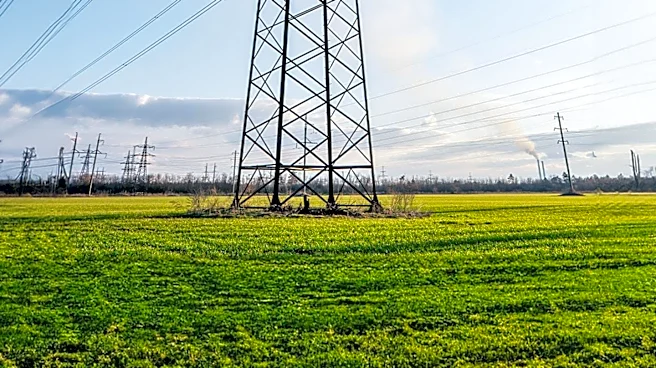
A new analysis by the Center for Climate and Energy Solutions (C2ES), in partnership with Greenline Insights, indicates that federal transmission reforms could significantly lower residential electricity bills. The modeling, which analyzed four regional
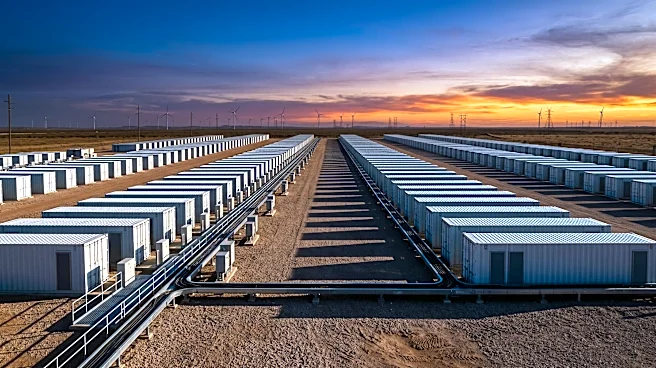
power systems accounting for 54% of the nation's electricity demand, projects a nationwide reduction of approximately $19 billion in residential electricity bills between 2026 and 2040. Additionally, these reforms are expected to cut cumulative grid costs by about $125 billion over the same period. The analysis also forecasts a 9% decrease in carbon dioxide emissions from the power sector in these regions by 2035, amounting to 71 million tons. The proposed reforms include expanded interregional transmission and interconnection queue reforms, aiming to streamline the process of building transmission lines and connecting power to the grid. The energy mix in the reform scenario shows substantial increases in battery storage (up 65%), solar power (up 22%), and wind power (up 14%), while natural gas generation's share of capacity is projected to decline from 45% to 39%.
Why It's Important?
These findings are significant for the U.S. as electricity demand is rapidly increasing. The projected reduction in residential electricity bills by $19 billion would provide substantial financial relief to American households, making energy more affordable. The decrease in cumulative grid costs by $125 billion would also benefit the broader economy by reducing operational expenses for utility providers and potentially stabilizing energy prices. Furthermore, the anticipated 9% reduction in power sector carbon dioxide emissions aligns with national climate goals and efforts to transition to a cleaner energy grid. By enabling more clean energy deployment and reducing reliance on natural gas, these reforms could mitigate exposure to fuel price volatility, enhancing energy security and economic stability. The analysis underscores the potential for practical policy changes to deliver both economic and environmental benefits, addressing critical challenges in the nation's energy infrastructure.
What's Next?
The analysis highlights the urgency of bipartisan permitting and transmission reform currently under debate in Congress. The findings are expected to inform policymakers and stakeholders as they consider legislative actions to modernize the U.S. electricity grid. If these reforms are enacted, the next steps would involve the implementation of new policies to expedite the construction of transmission lines and improve interconnection processes. This would likely lead to increased investment in renewable energy projects and battery storage, further diversifying the nation's energy portfolio. Continued monitoring of electricity demand and grid performance would be crucial to assess the effectiveness of these reforms and make any necessary adjustments. The Center for Climate and Energy Solutions is actively convening companies, stakeholders, and policymakers to advance these solutions, suggesting ongoing efforts to build consensus and move legislation forward.
Beyond the Headlines
Beyond the immediate economic and environmental benefits, these proposed reforms could trigger a long-term shift in how the U.S. approaches energy infrastructure development. By addressing the current bottlenecks in permitting and interconnection, the reforms could foster a more agile and responsive energy system capable of adapting to future technological advancements and climate challenges. The emphasis on expanding clean energy and reducing reliance on natural gas also has broader implications for national security, lessening dependence on volatile global energy markets. Ethically, the reforms aim to ensure that the costs of energy infrastructure are distributed more equitably, preventing undue burdens on consumers. Culturally, a more reliable and affordable clean energy grid could enhance public trust in renewable technologies and encourage greater adoption of sustainable practices across various sectors of society.