
What's Happening?
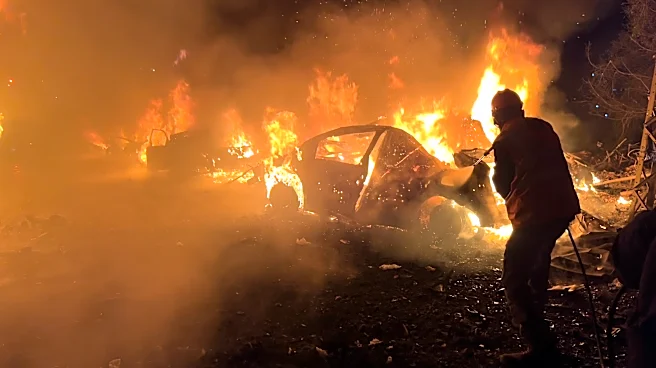
Shelly Kittleson, an American freelance journalist known for her daring assignments in conflict zones, was kidnapped in Baghdad. Kittleson, who has reported extensively from Iraq and Syria, was abducted by two men at a busy intersection in Baghdad. Her
work often involves traveling to areas with minimal government control, where she reports on local conditions and conflicts. Despite warnings from U.S. officials about potential threats from militia groups, Kittleson continued her work in Baghdad, believing the threats were not credible. Her abduction highlights the dangers faced by journalists operating in volatile regions without the backing of major news organizations.
Why It's Important?
The kidnapping of Shelly Kittleson underscores the increasing risks faced by journalists in conflict zones, particularly in regions like Iraq where militia influence is strong. This incident may deter freelance journalists from covering critical stories in such areas, potentially leading to a decrease in independent reporting from conflict zones. The abduction also raises concerns about the safety of foreign nationals in Iraq, especially those involved in journalism and humanitarian work. It highlights the need for stronger protective measures and support for journalists working in high-risk environments.
What's Next?
The U.S. government and international organizations are likely to increase pressure on Iraqi authorities to secure Kittleson's release. This incident may prompt discussions on improving safety protocols for journalists in conflict zones. Media organizations might also reconsider their support and safety measures for freelancers. The situation could lead to heightened diplomatic efforts to address the security challenges posed by militia groups in Iraq.