
What's Happening?
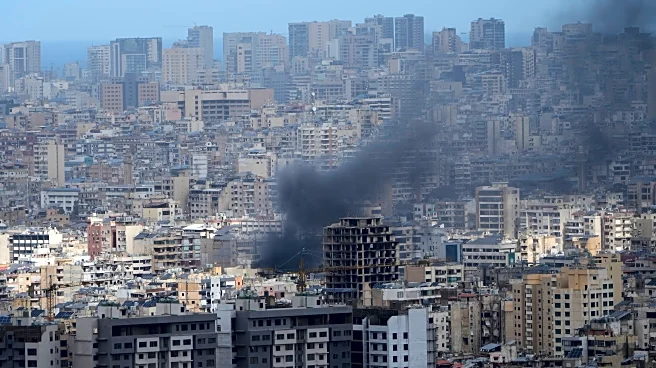
The ongoing military actions by the US and Israel have significantly affected Iran's cultural heritage and arts community. Since the bombardment began on February 28, the atmosphere in Iran has drastically changed, especially during Nowruz, the Persian
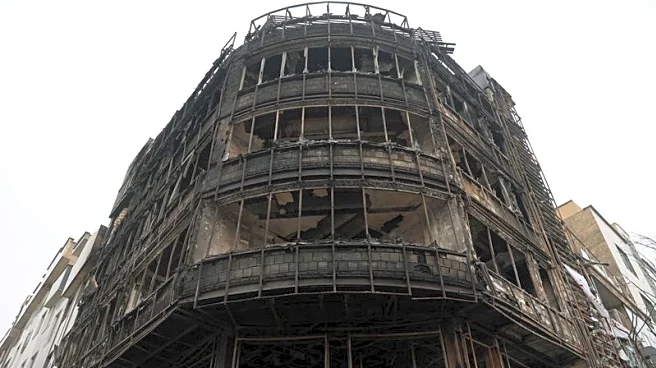
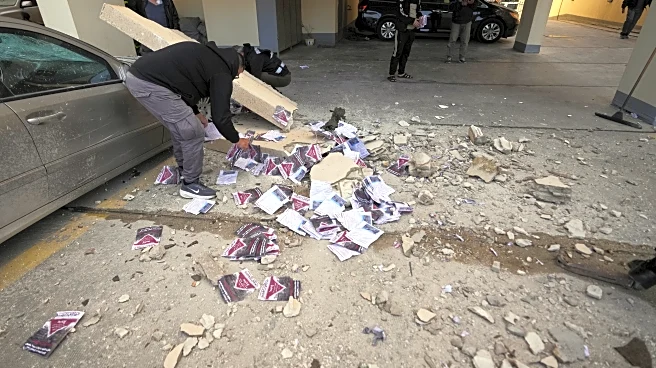
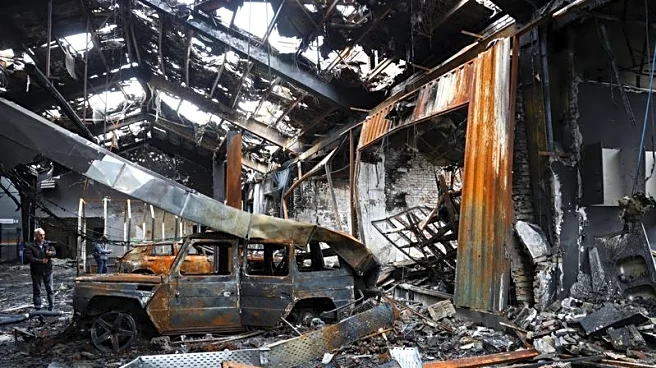
New Year. The conflict has led to internet blackouts, making communication difficult, and has forced museums to evacuate collections, while galleries and studios have closed. Artists like Homa and Mina (pseudonyms) describe the fear and disruption to their creative processes, with many projects halted and the art market severely impacted. The war has also damaged numerous cultural heritage sites, including the Golestan Palace and Sa'adabad Palace in Tehran, and Naqsh-e Jahan Square in Isfahan. The Blue Shield emblem, meant to protect cultural sites, has been installed at various locations, but its effectiveness is limited due to the nature of modern warfare.
Why It's Important?
The impact on Iran's cultural heritage and arts community highlights the broader consequences of military conflicts on cultural preservation and the arts. The damage to UNESCO World Heritage sites and the disruption of the art market underscore the vulnerability of cultural assets in conflict zones. This situation raises concerns about the protection of cultural heritage during armed conflicts, as well as the economic and social implications for artists and cultural institutions. The conflict has also sparked debates about the responsibilities of military forces to avoid targeting cultural sites, as emphasized by organizations like Blue Shield International. The situation in Iran serves as a reminder of the need for international efforts to safeguard cultural heritage and support affected communities.
What's Next?
The future of Iran's cultural heritage and arts community remains uncertain, depending largely on the outcome of the ongoing conflict. Efforts to protect cultural sites continue, with organizations like Blue Shield International attempting to communicate with Iranian authorities to update no-strike lists. However, internet disruptions have hindered these efforts. The art community faces challenges in maintaining operations and financial stability, with galleries closed and artists struggling to continue their work. The international community may need to increase support for cultural preservation and provide assistance to affected artists and institutions. The situation also calls for renewed discussions on international humanitarian law and the protection of cultural heritage in conflict zones.
Beyond the Headlines
The conflict in Iran highlights the ethical and legal challenges of protecting cultural heritage during warfare. The installation of the Blue Shield emblem and the creation of no-strike lists reflect efforts to uphold international conventions, but the effectiveness of these measures is questioned in modern warfare. The situation also underscores the cultural and psychological impact on artists, who face not only physical threats but also existential crises about their identity and purpose. The broader implications for global cultural heritage protection and the role of international organizations in conflict zones are significant, prompting discussions on how to better safeguard cultural assets and support affected communities.